Anode Rod Replacement in Valrico, FL
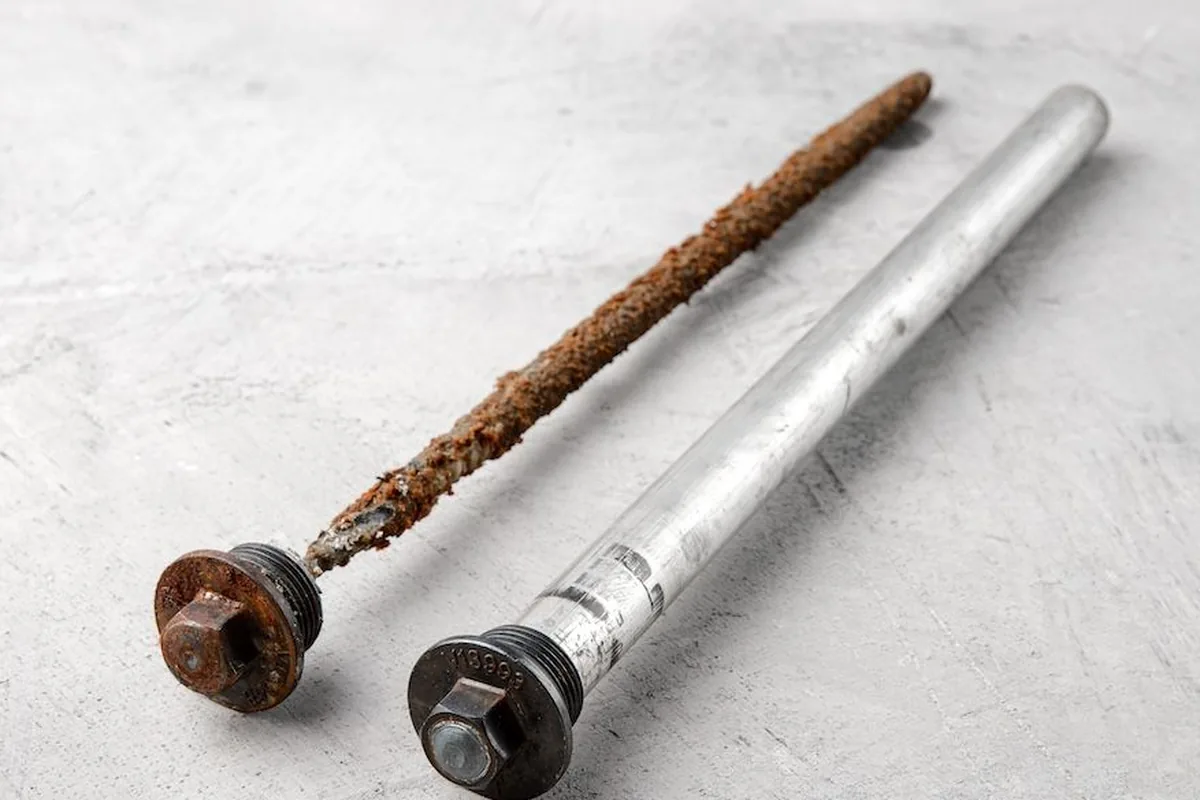
In short: Anode rod replacement swaps out the sacrificial rod inside your Valrico, FL water heater tank that attracts corrosion so the tank itself doesn't rust. When you call (833) 713-2101, tell us your heater's age and whether your hot water smells like rotten eggs, and we'll schedule an inspection.
How an Anode Rod Protects Your Water Heater
Inside every standard tank water heater in Valrico, FL, a long metal rod hangs down from the top of the tank into the water. That rod is the anode rod, and it exists for one reason: to corrode so your tank does not. Water, heat, and dissolved minerals create a mildly corrosive environment inside a steel tank. Through a process called galvanic corrosion, the more reactive metal sacrifices itself first. The anode rod is made from magnesium, aluminum, or an aluminum-zinc alloy, all of which corrode more readily than the steel tank wall and its glass lining.
As long as the rod has enough metal left, corrosion attacks the rod instead of the tank. Once the rod is consumed down to its steel core wire, the tank becomes the next target. That is when pinhole leaks, seam rust, and bottom failures begin. Replacing a depleted anode rod with a fresh one resets that protection and is one of the most cost-effective maintenance steps an owner of a tank water heater can take. Most manufacturers design the rod to last roughly three to five years, but in parts of Hillsborough County with hard water, that timeline can be considerably shorter.
Some heaters use a combination anode rod built into the hot-water outlet nipple rather than a separate hex-head rod on top of the tank. These combo rods do the same job but are easy to miss during a casual inspection. Part of our service is identifying which style your unit has before we quote anything, because the replacement part and the removal technique differ.
Signs Your Anode Rod Needs Replacement
A failing anode rod rarely announces itself with a dramatic failure. Instead it leaves a trail of smaller clues that Valrico homeowners can learn to recognize:
- Rotten-egg smell in hot water only. If your cold water smells fine but the hot water carries a sulfur or rotten-egg odor, sulfate-reducing bacteria are reacting with a depleted magnesium rod. This is the single most common symptom we see in Valrico, especially in homes on well water near the Lithia and Dover fringes.
- Rusty or discolored hot water. When the rod is gone, the tank wall starts corroding and rust enters the hot water supply. If only the hot tap runs discolored, the tank and rod are the likely culprits rather than the incoming water line.
- Your heater is three or more years old and the rod has never been checked. In Florida hard-water conditions, a rod can be substantially consumed by year three. Waiting until year eight or ten usually means there is nothing left to inspect.
- Popping, rumbling, or crackling noises. Sediment buildup and corrosion inside the tank make the burner or elements work harder. While noise has several causes, a depleted rod lets corrosion accelerate, which contributes to the problem.
- Hot water runs out faster than it used to. Corrosion and sediment reduce the effective capacity of the tank. A fresh rod will not remove existing sediment, but replacing the rod stops further tank-wall deterioration.
- Visible rod deterioration during inspection. A healthy rod is roughly three-quarters of an inch thick along its length. A rod worn down to a thin wire, coated in calcium, or missing large sections needs replacement now.
If you notice rust-colored water from both hot and cold taps, the problem is more likely in the supply piping than the anode rod, and we will tell you that honestly rather than sell you a rod you do not need.
Why Anode Rods Wear Out Faster in Valrico, FL
Valrico sits over a limestone aquifer, and the county and municipal water drawn from it carries a heavy load of dissolved calcium and magnesium. Hard water is more aggressive toward sacrificial anodes, so rods here deplete faster than the national averages printed in owner's manuals. Homes with water softeners see the opposite chemistry problem: softened water is more conductive and can actually consume a magnesium rod even faster, which is why softener owners in neighborhoods like FishHawk Ranch and Bloomingdale should have rods checked on a shorter cycle.
Private wells on the rural edges of our service area, around Lithia, Dover, Thonotosassa, and Wimauma, add iron, sulfur, and sediment to the mix. Iron bacteria and sulfate react with magnesium rods and produce the rotten-egg odor that drives so many service calls. In those cases we often recommend an aluminum-zinc alloy rod, which resists the odor-causing reaction better than plain magnesium while still protecting the tank.
Heat is the third factor. Valrico garages routinely reach 90 degrees or more in summer, and many water heaters live in those garages or in vented attics. Higher standing water temperature speeds every chemical reaction inside the tank, including anode consumption. A rod that might last five years in a cool basement can be gone in three in a Florida garage.
Our Anode Rod Replacement Process, Step by Step
Here is exactly what happens when our technician arrives for an anode rod replacement in Valrico:
- Shut down the energy source. For electric heaters we switch off the dedicated breaker and verify with a non-contact tester. For gas heaters we turn the gas control to pilot or off and confirm the burner is out.
- Shut off the cold-water inlet. The shutoff valve above the heater is closed so no new water enters during the work.
- Relieve pressure and drain a few gallons. We open a hot tap inside the house, then drain two to five gallons from the tank's drain valve into a bucket or hose. The tank does not need to be emptied; we only lower the waterline below the rod port.
- Locate the rod. Most tanks have a hex head on top, sometimes hidden under a plastic cap or insulation. Combo-style rods sit inside the hot-water outlet nipple. We identify the style before touching a wrench.
- Break the rod loose. Years of heat cycling can seize the threads. We use a 1-1/16 inch socket with a breaker bar, and an impact wrench when needed, bracing the tank so torque does not stress the water connections.
- Extract and assess. The old rod is pulled straight up and inspected. We show you its condition so you can see exactly what came out of your tank.
- Select the replacement. Magnesium for standard protection, aluminum-zinc for odor or softened-water situations, and segmented (flexible-link) rods where ceiling clearance is too tight to swing a rigid 40-inch rod. Many Valrico garage and attic installs have low clearance, making segmented rods the practical choice.
- Install with thread sealant. The new rod gets PTFE tape or pipe thread sealant rated for potable hot water, then is threaded in and torqued to spec without over-tightening.
- Refill and purge air. The inlet valve is reopened, the tank refills, and air is bled through the open hot tap until water runs steady.
- Restore power or gas and verify. The breaker goes back on or the gas control returns to its setting, the burner or elements are confirmed working, and every connection is checked dry before we leave.
Materials and Equipment We Use
We carry magnesium, aluminum-zinc, and segmented anode rods in the lengths that fit standard 30, 40, 50, and 75-gallon residential tanks, plus combo rods for units that use the outlet-nipple style. Our trucks stock 1-1/16 inch deep sockets, breaker bars, cordless impact wrenches, tank-bracing straps, potable-rated PTFE tape and thread sealant, drain hoses, buckets, non-contact voltage testers, and infrared thermometers to verify the tank returns to temperature after the work.
Rod selection matters more than most people realize. A magnesium rod offers the strongest galvanic protection but feeds odor-causing bacteria in sulfur-heavy well water. An aluminum-zinc rod is slightly less reactive but far better behaved in those conditions. We match the alloy to your water chemistry rather than installing whatever happens to be on the shelf.
Safety and Precautions
Water heater work combines scalding water, 240-volt electricity or combustible gas, and a pressurized vessel, so the precautions are non-negotiable. Power stays off until the tank is confirmed full; energizing exposed electric elements will destroy them in seconds. On gas units, we check that the pilot and burner behave normally after the gas control is returned to service and we test connections for gas odor before leaving the area. We never stand directly over the rod port while breaking it loose, because residual pressure can spit hot water. The temperature-pressure relief valve is function-checked as part of every visit, since a rod replacement is pointless if the tank's primary safety device is frozen. If your tank already shows signs of active leaking from the tank wall or seams, we will tell you that a new rod cannot save it and discuss replacement instead.
Valrico, FL Local Factors
Several local realities shape how we handle anode rods around Valrico. First is the hard water already described: plan on shorter rod life than the manual suggests, and consider inspection at year two or three rather than year five. Second is installation location. Slab-on-grade homes across Bloomingdale, Brandon, and Riverview commonly place the heater in the garage, where summer heat shortens rod life and where a slow tank failure can damage stored belongings long before anyone notices. Attic installs in two-story homes around Fish Hawk add the clearance problem: pulling a rigid rod in a low attic is often impossible, so segmented rods are standard practice for us there.
Hurricane season, June through November, is worth a mention. Power outages and the stop-start cycling that follows storms stress tanks, and the weeks after a major storm are when we see a wave of previously marginal heaters fail outright. Checking the rod before season is inexpensive preparation. Finally, many 1980s and 1990s homes in Bloomingdale, Seffner, and Temple Terrace still run original-era tanks that are well past the point where a rod helps. If your heater is over twelve years old, we will give you a straight assessment of whether rod replacement is money well spent or whether you should put it toward a new unit.
Anode Rod Replacement — Service Areas
Anode Rod Replacement in Apollo Beach, FL 33572
Anode rod replacement swaps out the sacrificial rod inside your Valrico, FL water heater tank that attracts corrosion so the tank itself doesn't rust.
Learn more →Anode Rod Replacement in Bloomingdale, FL 33596
Anode rod replacement swaps out the sacrificial rod inside your Valrico, FL water heater tank that attracts corrosion so the tank itself doesn't rust.
Learn more →Anode Rod Replacement in Brandon, FL 33511
Anode rod replacement swaps out the sacrificial rod inside your Valrico, FL water heater tank that attracts corrosion so the tank itself doesn't rust.
Learn more →Anode Rod Replacement in Dover, FL 33527
Anode rod replacement swaps out the sacrificial rod inside your Valrico, FL water heater tank that attracts corrosion so the tank itself doesn't rust.
Learn more →Anode Rod Replacement in Fish Hawk, FL 33547
Anode rod replacement swaps out the sacrificial rod inside your Valrico, FL water heater tank that attracts corrosion so the tank itself doesn't rust.
Learn more →Anode Rod Replacement in Gibsonton, FL 33534
Anode rod replacement swaps out the sacrificial rod inside your Valrico, FL water heater tank that attracts corrosion so the tank itself doesn't rust.
Learn more →Anode Rod Replacement in Hyde Park, FL 33606
Anode rod replacement swaps out the sacrificial rod inside your Valrico, FL water heater tank that attracts corrosion so the tank itself doesn't rust.
Learn more →Anode Rod Replacement in Lithia, FL 33547
Anode rod replacement swaps out the sacrificial rod inside your Valrico, FL water heater tank that attracts corrosion so the tank itself doesn't rust.
Learn more →Anode Rod Replacement in Mango, FL 33550
Anode rod replacement swaps out the sacrificial rod inside your Valrico, FL water heater tank that attracts corrosion so the tank itself doesn't rust.
Learn more →Anode Rod Replacement in Mulberry, FL 33860
Anode rod replacement swaps out the sacrificial rod inside your Valrico, FL water heater tank that attracts corrosion so the tank itself doesn't rust.
Learn more →Anode Rod Replacement in Plant City, FL 33563
Anode rod replacement swaps out the sacrificial rod inside your Valrico, FL water heater tank that attracts corrosion so the tank itself doesn't rust.
Learn more →Anode Rod Replacement in Riverview, FL 33578
Anode rod replacement swaps out the sacrificial rod inside your Valrico, FL water heater tank that attracts corrosion so the tank itself doesn't rust.
Learn more →Anode Rod Replacement in Ruskin, FL 33570
Anode rod replacement swaps out the sacrificial rod inside your Valrico, FL water heater tank that attracts corrosion so the tank itself doesn't rust.
Learn more →Anode Rod Replacement in Seffner, FL 33584
Anode rod replacement swaps out the sacrificial rod inside your Valrico, FL water heater tank that attracts corrosion so the tank itself doesn't rust.
Learn more →Anode Rod Replacement in Seminole Heights, FL 33603
Anode rod replacement swaps out the sacrificial rod inside your Valrico, FL water heater tank that attracts corrosion so the tank itself doesn't rust.
Learn more →Anode Rod Replacement in Sun City Center, FL 33573
Anode rod replacement swaps out the sacrificial rod inside your Valrico, FL water heater tank that attracts corrosion so the tank itself doesn't rust.
Learn more →Anode Rod Replacement in Tampa, FL 33619
Anode rod replacement swaps out the sacrificial rod inside your Valrico, FL water heater tank that attracts corrosion so the tank itself doesn't rust.
Learn more →Anode Rod Replacement in Temple Terrace, FL 33617
Anode rod replacement swaps out the sacrificial rod inside your Valrico, FL water heater tank that attracts corrosion so the tank itself doesn't rust.
Learn more →Anode Rod Replacement in Thonotosassa, FL 33592
Anode rod replacement swaps out the sacrificial rod inside your Valrico, FL water heater tank that attracts corrosion so the tank itself doesn't rust.
Learn more →Anode Rod Replacement in Valrico, FL 33594
Anode rod replacement swaps out the sacrificial rod inside your Valrico, FL water heater tank that attracts corrosion so the tank itself doesn't rust.
Learn more →Anode Rod Replacement in Wimauma, FL 33598
Anode rod replacement swaps out the sacrificial rod inside your Valrico, FL water heater tank that attracts corrosion so the tank itself doesn't rust.
Learn more →Anode Rod Replacement in Ybor City, FL 33605
Anode rod replacement swaps out the sacrificial rod inside your Valrico, FL water heater tank that attracts corrosion so the tank itself doesn't rust.
Learn more →Frequently Asked Questions
Every three to five years is the general rule, but Valrico's hard water pushes most homes toward the shorter end. Homes with water softeners or sulfur-heavy well water should be checked every two to three years. We recommend a first inspection at year two so you learn your own tank's depletion rate.
In many cases, yes. The odor usually comes from bacteria reacting with a depleted magnesium rod. We replace it with an aluminum-zinc rod, which resists that reaction, and flush the tank. If the odor persists after that, the well or supply itself may need treatment, and we will say so.
You can, but it requires shutting off power or gas, shutting off water, draining several gallons, and breaking loose a fitting that may be seized after years of heat. Many do-it-yourself attempts end with a rounded hex head or a damaged tank fitting. The inspection itself is quick for a technician with the right leverage and bracing.
Magnesium protects the tank most aggressively and suits city or county water without odor issues. Aluminum-zinc is the better pick for well water with sulfur smell or for homes with softeners. We test your situation and recommend accordingly rather than defaulting to one type.
Seized rods are common on older tanks. We use penetrating technique, controlled impact, and tank bracing to free them without damaging the tank. In rare cases where the port threads are damaged, we discuss alternatives such as a combo rod in the hot outlet or, if the tank is already failing, replacement of the unit.
Most appointments run 45 to 90 minutes, including draining, extraction, installation, refill, and verification. Seized rods or tight attic clearances can extend that, and we will tell you upfront if your setup looks like a longer job.