Published: 2026-10-10
Anode Rod Replacement Guide for Water Heaters
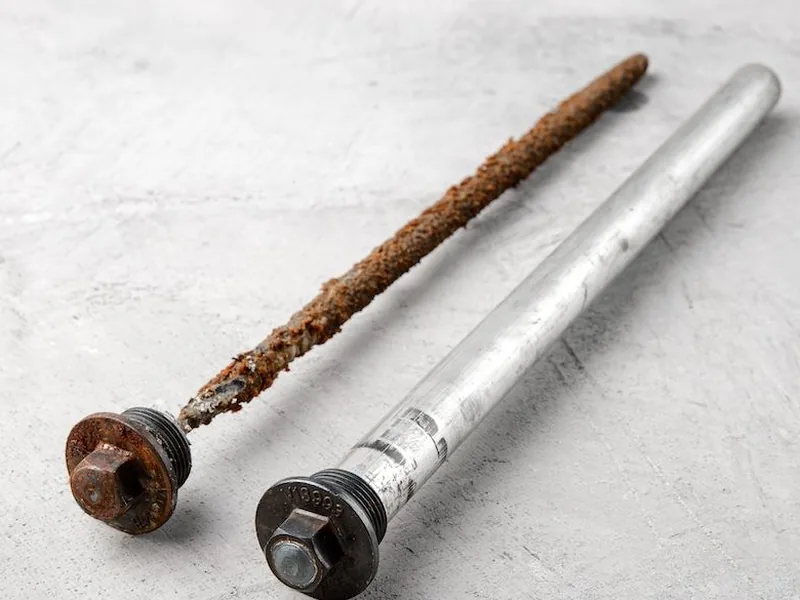
Inside nearly every tank-style water heater in Valrico hangs a humble metal rod that decides whether the tank lasts six years or twelve. The anode rod is a sacrificial component — it corrodes on purpose so the steel tank does not. Most homeowners never see it, never think about it, and only learn it exists when rusty water or a rotten-egg smell shows up at the tap. By then, the rod is long gone and the tank itself has been corroding for months or years.
Florida water is particularly hard on anode rods. Valrico's municipal and well water carries dissolved minerals that accelerate the electrochemical reaction the rod is designed to attract. Where a rod might last five years in soft-water regions, local plumbers routinely find rods completely consumed in three. Replacing the anode rod on schedule is one of the least expensive ways to protect a water heater — and one of the most skipped.
What the Anode Rod Does
A water heater tank is made of steel, and steel rusts when it sits in hot water. The glass lining inside the tank slows corrosion but never covers every inch — there are always microscopic gaps, especially around welds and fittings. The anode rod, typically magnesium or aluminum, is more reactive than steel. Through galvanic corrosion, it draws the corrosive reaction to itself, dissolving over time while the tank walls stay intact.
The rod screws into the top of the tank and hangs down into the water. As long as a healthy portion of the rod remains, the tank is protected. Once the rod is eaten down to its steel core wire, protection stops and the tank begins rusting from the inside out. That internal rust eventually becomes pinhole leaks, then a ruptured tank — the kind of failure that floods a garage or utility closet.
Signs Your Anode Rod Needs Replacing
Because the rod is hidden inside the tank, you read its condition through symptoms:
- Rotten-egg smell in hot water. Sulfate-reducing bacteria in the tank react with a magnesium anode rod and produce hydrogen sulfide gas. Cold water smells fine; only hot water stinks. This is the classic failing-anode signal.
- Rusty or discolored hot water. When the rod is depleted, the tank walls start corroding and rust tints the hot water. If cold water runs clear but hot water runs brown, the tank interior is the source.
- The heater is three to five years old and the rod was never checked. In Valrico's hard water, assuming the original rod is still good after four years is optimistic.
- A visible check shows a thin rod. If you pull the rod and it is less than half an inch thick, coated in calcium, or reduced to the core wire, it is done.
- The water heater is making more noise. Heavy scale buildup on a depleted rod and tank interior causes popping and rumbling during heating cycles.
How Florida Hard Water Shortens Anode Rod Life
Hard water contains high levels of calcium and magnesium. These minerals do two things to an anode rod: they speed the galvanic reaction that consumes it, and they coat the rod in scale that can insulate portions of it, forcing the remaining exposed metal to work harder. Homes in Valrico on well water often see even faster depletion because well water can also carry sulfates and chlorides that attack the rod aggressively.
Higher water heater temperature settings compound the problem. Every ten degrees above 120°F noticeably accelerates both corrosion and scale formation. Many Florida heaters are set to 130°F or higher from the factory or by a previous homeowner. Dropping the thermostat to 120°F extends rod life, reduces scalding risk, and trims energy use — a rare triple win. If mineral-heavy water is wearing out rods and heating elements, scheduling regular water heater maintenance with tank flushing helps the whole system last longer.
How to Check Your Anode Rod
Inspecting the rod takes basic tools and about half an hour, but it requires shutting the heater down safely first:
- Turn off power at the breaker (electric heater) or set the gas control to pilot/off (gas heater).
- Shut off the cold-water supply valve above the heater.
- Open a hot-water tap somewhere in the house to relieve pressure, and drain a few gallons from the tank's drain valve into a bucket.
- Locate the anode rod's hex head on top of the tank — sometimes hidden under a plastic cap. On some models it is combined with the hot-water outlet nipple.
- Loosen it with a 1-1/16" socket and a breaker bar. Pull the rod up and inspect it.
A healthy rod looks pitted but still thick — roughly 3/4" in diameter. Replace it when it is thinner than 1/2", heavily coated in white calcium, or eaten down to the inner steel wire. Some Valrico homes have water heaters tucked into tight attic or closet spaces where the rod cannot be pulled straight up; segmented flexible rods exist for exactly that situation.
Replacing the Anode Rod: Materials and Options
Replacement rods come in three materials. Magnesium rods offer the strongest protection and are the default for most municipal water, but they feed the bacteria that cause rotten-egg odor. Aluminum/zinc rods corrode more slowly and are the standard fix for sulfur smells. Powered (impressed-current) anode rods use a small electrical current instead of sacrificial metal — they never need replacing and eliminate odor, though they cost more upfront.
Installation is the reverse of removal: wrap the threads with Teflon tape, thread the new rod in, tighten firmly, restore water, check for leaks at the fitting, then restore power or gas. The whole job typically takes under an hour. Homeowners comfortable with basic plumbing tackle it themselves; others book professional anode rod replacement to avoid wrestling a seized rod or cross-threading the tank fitting — a mistake that can ruin the tank.
When a New Rod Is Not Enough
An anode rod protects against future corrosion; it cannot reverse damage already done. If the tank itself is leaking from the body — water seeping from seams, the base, or rusted-through spots — the steel has failed and no rod will save it. That heater needs replacement, not a rod. Similarly, if rusty water persists a week after installing a fresh rod, the tank interior is too far gone. Catching the rod in time is the entire point: a timely anode rod replacement costs far less than a new heater plus water damage cleanup.
How Valrico's Water Chemistry Eats Anode Rods Faster
Anode rods are sacrificial by design — they corrode so your tank does not — but in Valrico they sacrifice themselves faster than the national average. Hillsborough County's public water supply blends treated surface water with groundwater, and it carries both hardness minerals and chloramine disinfectant. Chloramine is tougher on anode rods than old-fashioned chlorine, accelerating the electrochemical reaction that dissolves the rod. A standard magnesium rod that might last five years in soft northern water can be down to a bare wire in three years here.
Well water tells a harsher story. Homes in Lithia, Dover, Thonotosassa, and the outskirts of Plant City often run on private wells with dissolved iron, sulfur, and high total dissolved solids. Iron-heavy water attacks magnesium rods aggressively, and sulfur compounds produce the rotten-egg smell that many well-water homeowners know too well. That smell is actually a clue: it often means the anode rod is reacting with sulfate-reducing bacteria in the water. Switching to an aluminum-zinc rod usually quiets the odor while still protecting the tank.
Water softeners add another twist. Softened water is more conductive and more aggressive toward anode rods, so softener owners in Bloomingdale and Fish Hawk should inspect rods on the shorter end of the schedule. The fix is not to skip softening — scale protection is worth it — but to check the rod every two years instead of three or four. When we replace a rod in a Valrico home, we match the rod alloy to the water: magnesium for standard city water, aluminum-zinc for odor or softened-water situations, and we note the water type on the service record so the next inspection is timed correctly.
Powered Anode Rods: An Upgrade Worth Knowing About
For homeowners tired of replacing sacrificial rods every few years, powered (impressed-current) anode rods are worth understanding. Instead of dissolving to protect the tank, a powered rod uses a small electrical current — plugged into a standard outlet — to provide the same cathodic protection indefinitely. The rod itself does not deplete, so there is nothing to replace on a schedule.
Powered rods shine in exactly the conditions Valrico dishes out: aggressive well water, softened water, and homes where the heater sits in a tight closet with low overhead clearance that makes conventional rod replacement a wrestling match. They also eliminate the sulfur-odor reaction entirely, since there is no magnesium to feed the bacteria. The tradeoff is upfront cost — a powered rod runs several times the price of a conventional one — plus the need for a nearby outlet and a small amount of standby electricity.
A powered rod does not make a tank immortal. It protects against corrosion, but it does nothing about sediment buildup, pressure stress, or worn components — the heater still needs regular maintenance. But for a relatively new tank in a Lithia well-water home or a Fish Hawk house with a softener, pairing the tank with a powered rod removes the single most common cause of premature tank death. If your conventional rod keeps vanishing in two years, ask us whether a powered rod makes sense for your water.
Water Heater Acting Up in Valrico?
Rotten-egg smell, rusty water, or a heater past its prime — get straight answers and a free estimate from Water Heater Leak Repair Works.
Frequently Asked Questions
How often should the anode rod be replaced in Valrico?
Plan on inspecting it every two to three years and replacing it every three to five. Valrico's hard water consumes rods faster than the national average, and well-water homes may need replacement even sooner. A rod check during routine maintenance is the simplest way to stay on schedule.
Can I replace the anode rod myself?
Yes, if you are comfortable shutting off power or gas, draining a few gallons, and breaking loose a tight fitting with a breaker bar. The main risks are a seized rod that will not budge and cross-threading the new one. If the heater is in a tight space or the rod is combined with the hot-water outlet, many homeowners prefer professional service.
Why does only my hot water smell like rotten eggs?
The odor comes from hydrogen sulfide gas produced when sulfate-reducing bacteria react with a magnesium anode rod inside the tank. Cold water bypasses the tank, so it smells fine. Switching to an aluminum/zinc or powered anode rod usually resolves it.
Will a new anode rod stop my tank from leaking?
No. The rod prevents corrosion; it cannot repair a tank that has already rusted through. If water is leaking from the tank body itself rather than a fitting or valve, the heater needs to be replaced.
Which anode rod material is right for Florida water?
Magnesium offers the strongest corrosion protection for standard municipal water. Aluminum/zinc is the better pick when sulfur odor is a problem. Powered anode rods are the longest-lasting option and eliminate odor entirely, making them popular in hard-water areas like Valrico despite the higher upfront cost.