Published: 2026-10-10
Emergency Water Heater Shutoff: A Homeowner Guide
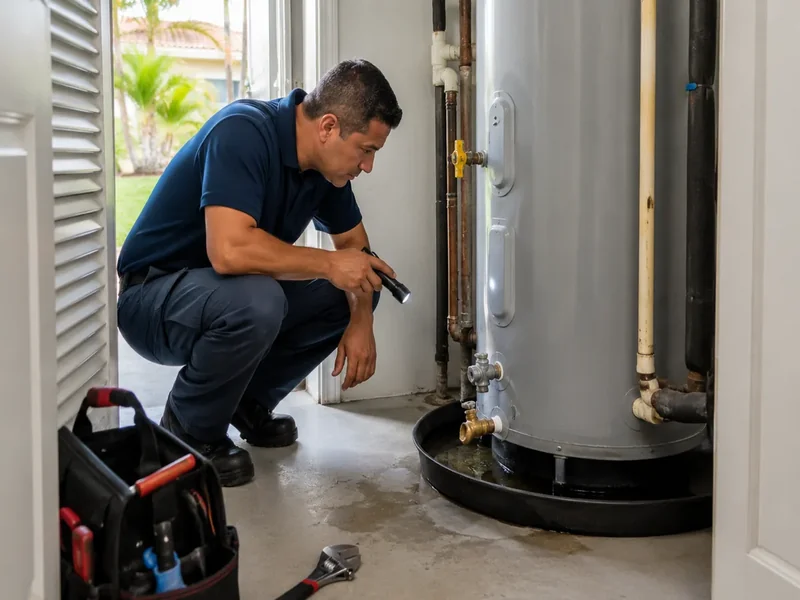
Water is pouring from your water heater at 11 p.m. Do you know — right now, without looking anything up — how to stop it? Most Valrico homeowners do not. The shutoff valves exist, but they are behind boxes in the garage, painted over, or so stiff from years of disuse that they will not budge in a panic. An emergency is the worst possible time to learn your plumbing.
This guide fixes that in ten minutes. Learn where your water heater shutoffs are today, test them once, and you will cut a potential flood from hundreds of gallons to a mop-up. In Florida, this knowledge doubles as hurricane-season preparation: shutting down the water heater is a standard step before evacuating ahead of a major storm.
The Three Things You May Need to Shut Off
A water heater emergency can require stopping three things: the water feeding the tank, the energy heating it, and — for gas units — the fuel supply.
- Cold-water inlet valve. Located on the pipe entering the top of the heater (usually the right-hand pipe). Turn it clockwise to close. This stops new water from entering the tank, which stops most leaks from getting worse.
- Power or gas. For electric heaters, switch off the dedicated double breaker labeled "water heater" in your panel. For gas heaters, turn the gas control knob on the unit to "pilot" or "off." Never let a heater run while the tank is empty or leaking badly — electric elements burn out in seconds without water, and a gas burner under a compromised tank is a hazard.
- Main house water shutoff. If the heater's inlet valve is stuck, missing, or you cannot reach it, shut off water to the whole house. In most Valrico homes this is at the meter box near the street or a valve where the line enters the house.
Finding Your Valves Before You Need Them
Valrico homes put water heaters in a few predictable places: the garage, a utility closet, a laundry room, or occasionally the attic. Go look now, with a flashlight, and identify:
- The cold-water inlet valve above the heater. Note whether it is a lever-style ball valve (quarter-turn) or an older round gate valve (multiple turns). Ball valves are reliable; old gate valves often seize.
- The breaker in your electrical panel or the gas control knob on the unit.
- The main house shutoff, and confirm it actually turns.
Try each valve gently. If a gate valve will not move, do not force it with all your strength — a snapped valve stem is worse than a stiff one. Stiff valves are a maintenance item, not an emergency: have them exercised or replaced during your next service visit. Homes with water heater leak detection concerns should be especially sure the inlet valve works, since fast shutoff limits damage from a hidden leak.
Step-by-Step: Shutting Down in an Emergency
When water is actively leaking from the heater:
- Stay safe first. If water is near the breaker panel, outlets, or the heater's electrical connections, do not touch anything electrical. If you smell gas (rotten-egg odor) near a gas heater, leave the area and call for help from outside.
- Close the cold-water inlet valve on top of the heater — clockwise until it stops.
- Kill the heat. Electric: flip the water heater breaker off. Gas: turn the control knob to "off."
- Open a hot-water tap at a nearby sink to relieve pressure and let the tank drain down through the leak.
- Contain the water. Towels, a wet-dry vacuum, and moving nearby belongings buy time. If the heater sits in a drain pan, confirm the pan's drain line is actually flowing and not clogged.
- Call for repair. Describe what you see: where the water is coming from, whether it is hot, and how fast. That helps the technician arrive prepared. Our emergency water heater repair line is the fastest way to get a technician rolling.
Do not drain the tank completely through the drain valve unless instructed — a partially drained tank is stable; the priority is stopping the inflow and the heat.
Hurricane Season: Shutting Down Before You Evacuate
Valrico sits in a hurricane zone, and an evacuated home with a pressurized water heater is a flood waiting for a power surge or pressure spike. Before leaving ahead of a major storm:
- Turn the water heater's energy off (breaker off or gas to pilot/off).
- Close the cold-water inlet valve — or the main house shutoff if you are shutting the whole house down.
- If flooding is a realistic risk at your property, consider draining the tank to reduce weight and contamination, and strap the heater if it is not already secured.
- On return, do not just flip the breaker back on. Refill the tank completely first (open a hot tap until water runs steady), check for leaks at every fitting, then restore power or gas.
Storm-related pressure fluctuations and outages are also when temperature-and-pressure relief valves get a workout — a valve that starts dripping after a storm deserves inspection, not a shrug.
After the Emergency: What Comes Next
Once the water is stopped, note the details for the repair visit: where the leak appeared (top fittings, drain valve, base of tank, TPR discharge pipe), whether the water was hot, and the heater's age from the serial number label. A leak from a fitting or valve is usually repairable; water coming from the tank body itself means replacement. Either way, do not restore power or gas to a leaking heater — let the technician verify it is safe first.
Finding Your Shutoffs Before the Emergency: A 10-Minute Valrico Walkthrough
The worst time to learn where your shutoffs are is during an active leak. Spend ten minutes this weekend on a shutoff walkthrough — it is the highest-value home maintenance task that costs nothing.
Start at the water heater. The cold water shutoff is a valve on the cold inlet pipe, usually on the right side above the tank — in most Valrico homes it is a quarter-turn ball valve with a lever handle. Turn it perpendicular to the pipe to close it. If yours is an older gate valve with a round wheel handle, turn it clockwise until it stops, but be gentle: aged gate valves can snap. If the valve is stuck or corroded, do not force it — that is a repair to schedule now, not during a flood.
Next, find the main house shutoff. In Florida slab-on-grade homes — which covers most of Valrico, Brandon, and Riverview — the main shutoff is usually on an exterior wall near the water meter, in the garage, or in a utility box at the property line. It controls all water to the house and is your backup if the heater's dedicated valve fails. Make sure every adult in the household knows where it is.
For gas heaters, locate the gas shutoff valve on the gas line feeding the heater — a lever handle you turn perpendicular to the pipe. And know your breaker panel: the water heater's double-pole breaker should be labeled. If it is not labeled, take five minutes to map your panel now; in an emergency you do not want to guess. Finish the walkthrough by showing everyone in the house, including teenagers, exactly what to turn and in what order: water first, then power or gas.
Hurricane Season Shutoff Planning for Snowbirds and Travelers
Valrico's hurricane season runs June through November, and it overlaps with the months many snowbirds head north and families take long vacations. An empty house with a leaking water heater is how five-figure water damage happens — the leak runs for days or weeks instead of minutes.
If you will be gone more than a few days during storm season, shut off the main water supply to the house before you leave. With no water pressure in the lines, a failed tank fitting or burst connector cannot flood anything. For the water heater itself, turn a gas unit to "pilot" or "vacation" mode, or switch an electric unit's breaker off — there is no reason to keep 50 gallons hot for an empty house, and it eliminates the energy waste and the overheating risk.
Do not drain the tank for a vacation shutdown unless you will be gone for months; a full tank is actually more stable and less corrosion-prone than an empty one. Do leave the job half-done correctly: after shutting the main, open a faucet at the lowest point to relieve pressure, then close it. And if a named storm is approaching while you are away, this pre-shutdown is already your storm prep — one less thing for a neighbor or property manager to handle.
Snowbirds leaving for the whole summer should go one step further: have the heater serviced before departure, confirm the drain pan and TPR discharge are clear, and consider a Wi-Fi leak sensor with automatic shutoff at the heater. The sensor texts you and closes the valve on its own — cheap insurance for a house you will not see for four months. When you return in the fall, restore water before power or gas, check for any weeping at fittings that sat dry all summer, and you are back in business.
Water Heater Emergency in Valrico?
Shut the water off, kill the power or gas, then call Water Heater Leak Repair Works. We handle water heater emergencies across Valrico and nearby communities.
Frequently Asked Questions
Which valve shuts off water to just the water heater?
The cold-water inlet valve on the pipe entering the top of the heater. Closing it stops water from entering the tank without affecting cold water to the rest of the house.
Should I shut off the gas or just turn it to pilot?
In an active leak emergency, turn it fully to "off" — pilot included. "Pilot" still feeds a small flame, and with a compromised tank, fully off is the safer choice until a technician inspects the unit.
What if the inlet valve is stuck open?
Use the main house water shutoff instead — at the meter or where the line enters the home. Then have the stuck heater valve replaced; a shutoff that does not shut off is a repair waiting to happen.
Is it safe to touch the water heater during a leak?
Generally yes if the water is not near electrical components and there is no gas smell. But if water is pooling around the base near wiring, or you smell gas, keep your distance and call for help.
Do I need to drain the tank after shutting everything off?
Not necessarily. Closing the inlet valve and killing the heat stabilizes the situation. Draining is useful before a long evacuation or before certain repairs, but it is not an emergency requirement.
How do I restart the heater after an evacuation shutdown?
Open the inlet valve, fill the tank completely (run a hot tap until the flow is steady with no sputtering), inspect all fittings for leaks, then restore power at the breaker or relight the gas per the manufacturer's instructions.