Published: 2026-10-10
Water Heater Expansion Tank Guide: What to Know
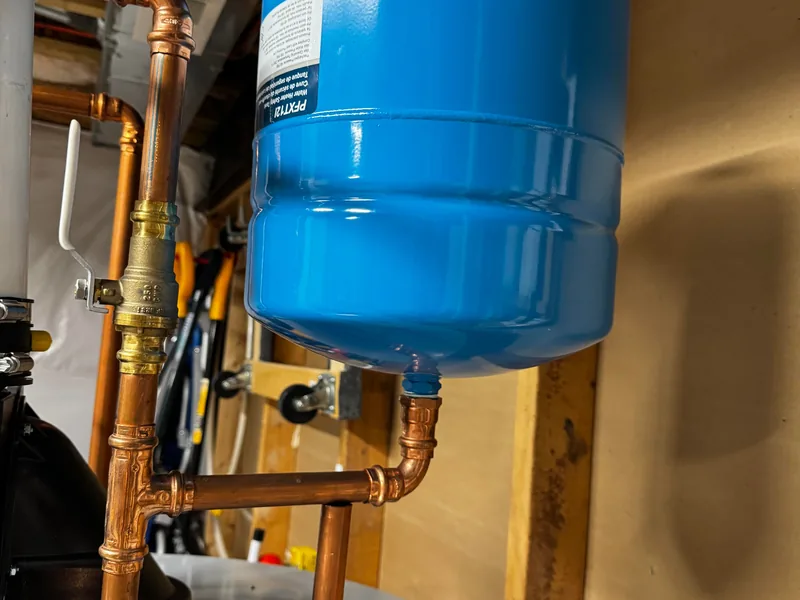
When water heats, it expands. In an open plumbing system, that extra volume pushes harmlessly back into the municipal water main. But most Valrico homes built or re-piped in recent decades have a check valve, pressure-reducing valve, or backflow preventer on the main line — creating a "closed" system where expanded water has nowhere to go. Pressure climbs with every heating cycle, stressing the tank, the TPR valve, and every fitting in the house.
The expansion tank is the fix: a small tank, usually mounted above or beside the water heater, with a rubber bladder inside that absorbs the extra volume like a shock absorber. It is a simple device, it is required by code in many situations, and when it fails, the symptoms — a dripping TPR valve, weeping fittings, pressure spikes — get misdiagnosed as water heater problems.
How an Expansion Tank Works
Inside the steel shell, a flexible bladder divides the tank into two chambers. One side connects to the home's plumbing; the other holds pressurized air, pre-charged to match the home's water pressure (typically around the pressure the pressure-reducing valve is set to). When heated water expands, it pushes into the water side of the tank, compressing the air cushion. When water cools and contracts, the air pushes it back out. The system pressure stays stable instead of spiking.
Without that cushion in a closed system, pressure can spike dramatically during each heating cycle. The temperature-and-pressure relief (TPR) valve becomes the only outlet, dripping or discharging to protect the tank. A TPR valve that drips regularly is often not a bad TPR valve at all — it is doing its job against pressure that an expansion tank should be absorbing. If your TPR discharge pipe is wet, read our TPR valve service page, but check the expansion tank first.
Signs Your Expansion Tank Has Failed
Expansion tanks fail in two main ways: the bladder ruptures (the tank fills with water — "waterlogged") or the air charge leaks out through the Schrader valve. Either way, the cushion is gone. Watch for:
- TPR valve dripping or discharging after heating cycles — the classic symptom.
- A tank that feels heavy or sounds full. Tap it: the top should ring hollow (air) and the bottom sound solid (water). If the whole thing thuds solid, the bladder has failed.
- Water leaking from the air valve stem on top of the expansion tank — air side should never contain water.
- Visible rust or corrosion on the tank shell, especially around the connection.
- Pressure gauge readings that spike well above the normal range when the heater runs.
- Premature failure of other parts — supply lines, washing machine hoses, and faucet cartridges all suffer under repeated pressure spikes.
Expansion tanks typically last five to ten years. In Florida's heat, tanks installed in hot garages or attics age faster as the bladder material breaks down.
Sizing and Pressure: Getting It Right
An expansion tank must match both the water heater's capacity and the home's water pressure. Too small and it cannot absorb the expansion volume; charged to the wrong pressure and the bladder either never engages or stays permanently compressed. The air pre-charge should equal the home's static water pressure — measured with a gauge on an outdoor spigot when no water is running.
This is where DIY replacements go wrong most often: the new tank goes on with its factory pre-charge, which rarely matches the house. A two-minute pressure check and adjustment with a bicycle pump makes the difference between a tank that works and one that is decorative. When we handle expansion tank installation, pressure matching is part of the job, not an afterthought.
Where It Mounts and What Installation Involves
Most residential expansion tanks hang from the cold-water inlet pipe above the heater, supported by the piping, or sit on a nearby shelf or bracket with a short connecting line. The tank must be supported — a water-filled expansion tank is heavy, and hanging that weight from unsupported copper pipe stresses the joints.
Installation itself is straightforward: shut off water and power/gas, relieve pressure, remove the old tank, check and set the new tank's pre-charge, thread it on with sealant, restore everything, and verify no leaks and stable pressure. The job typically takes under an hour. What matters is the diagnosis before it — confirming the expansion tank is actually the problem rather than a faulty TPR valve or excessive municipal pressure.
Do You Even Need One?
Not every home does. If your plumbing has no check valve or pressure-reducing valve — common in some older Valrico homes — the system is "open" and expansion pushes back to the main. But the moment a PRV, check valve, or backflow preventer is installed (often during a re-pipe, meter upgrade, or irrigation backflow installation), the system becomes closed and an expansion tank becomes necessary. Many homeowners discover this the hard way: a plumber installs a PRV to fix high pressure, and weeks later the TPR valve starts dripping because nobody added the expansion tank.
Local code generally requires thermal expansion control on closed systems. If your water heater was replaced recently and no expansion tank was installed despite a PRV on the main, that is worth correcting — the repeated pressure cycling shortens the new heater's life from day one.
Sizing and Charging: Getting the Numbers Right
Expansion tanks are not one-size-fits-all, though for most Valrico homes the answer is refreshingly standard. A 2-gallon thermal expansion tank suits the 40- and 50-gallon water heaters found in the vast majority of our area's homes. Larger heaters — 75-gallon units in bigger Fish Hawk or Riverview homes — step up to a 4.5-gallon tank. Undersizing is the common mistake: a too-small tank saturates quickly and stops absorbing expansion, which defeats its purpose.
Charging matters as much as sizing. The tank's air pre-charge must match your home's static water pressure — typically 50 to 60 PSI in a properly regulated Valrico house. Set the charge with the tank disconnected from water pressure (or the system depressurized), using a standard tire gauge and pump on the Schrader valve. A tank charged to 40 PSI in a 65 PSI house arrives pre-defeated; a tank charged to 80 PSI in a 50 PSI house barely engages. Either way, the bladder does not do its job.
This is also why expansion tanks fail silently. The bladder ruptures or the air charge bleeds out over a few years, and nothing visible changes — until the TPR valve starts weeping or a fitting loosens from cyclic pressure spikes. The test takes sixty seconds: tap the tank (top should ring hollow, bottom sound solid with water) and check the air charge with a gauge. We do this on every maintenance visit because a dead expansion tank is one of the most common hidden problems we find in Valrico homes.
Expansion Tanks and Valrico's Closed Systems
Whether your home needs an expansion tank comes down to one question: is your plumbing system closed? A closed system is any setup where heated water cannot expand backward into the municipal main — and in modern Valrico homes, the answer is almost always yes. Pressure-reducing valves, check valves, backflow preventers on irrigation systems, and even some water meters all close the system.
This catches homeowners off guard in a specific scenario we see regularly: a house in Bloomingdale or Brandon gets a new PRV to fix high incoming pressure — the right call — but no expansion tank is added. The PRV solves the static pressure problem while creating a thermal expansion problem. Within months, the TPR discharge pipe starts dripping and fittings weep, and the homeowner assumes the new PRV caused a leak. What actually happened is that every heating cycle now spikes system pressure with nowhere to go.
Florida plumbing code requires thermal expansion control on closed systems, so this is not optional equipment — it is code. If your home has a PRV, a check valve, or a backflow preventer and no expansion tank at the water heater, you have both a code gap and a leak risk. The fix is a single visit: properly sized tank, correct pre-charge, mounted on the cold water line near the heater with adequate support. It is one of the cheapest forms of leak insurance a Valrico homeowner can buy.
TPR Valve Dripping? Pressure Spikes?
A failed expansion tank is often the real cause. Water Heater Leak Repair Works diagnoses and replaces expansion tanks across Valrico — call for a free estimate.
Frequently Asked Questions
How do I test my expansion tank?
Tap the tank from top to bottom. The upper portion should sound hollow (air) and the lower portion solid (water). If the entire tank sounds solid and feels heavy, the bladder has ruptured. You can also press the Schrader valve briefly — air should hiss out; water means the bladder failed.
Can a bad expansion tank cause leaks elsewhere in the house?
Yes. Repeated pressure spikes stress every seal and connection in the plumbing system — supply lines, toilet fill valves, washing machine hoses. Fixing the expansion tank protects the whole house, not just the heater.
What pressure should the expansion tank be set to?
Match your home's static water pressure, measured with a gauge on a hose spigot with no water running. Most Valrico homes sit in a moderate range, but the only correct number is the one your gauge shows.
How long does an expansion tank last in Florida?
Typically five to ten years. Heat accelerates bladder breakdown, so tanks in hot garages or attics trend toward the shorter end. Include it in your periodic water heater checkups.
My TPR valve drips but the expansion tank seems fine. What else could it be?
Excessive incoming water pressure (a failing or missing PRV), a faulty TPR valve, or a thermostat running too hot can all cause dripping. A technician can isolate the cause with a pressure gauge and a few checks rather than replacing parts blindly.