Published: 2026-10-10
10 Signs Your Water Heater Is Leaking
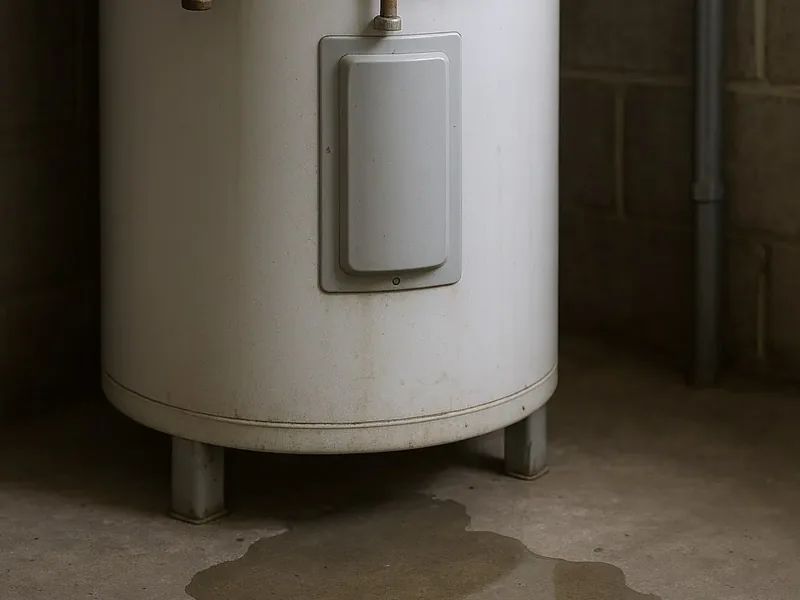
Water heaters rarely fail without leaving clues. Long before a tank ruptures or a fitting lets go, the heater broadcasts its distress — a damp spot here, a rust streak there, a new sound during heating, water that does not get quite as hot. Homeowners who recognize these early signs get repairs on their schedule. Those who miss them get emergencies on the leak's schedule.
Valrico homes add local twists to the detective work: slab foundations that hide leaks under concrete, humid garages where condensation masquerades as leakage, and hard water that accelerates every failure mode. Here are the signs that matter, what each one means, and how urgently to act.
Visual Signs: What to Look For
- Water pooling at the base. The most obvious sign and the most serious when the source is the tank itself. Water under the heater with no identifiable fitting source means the tank wall has failed — replacement, not repair.
- Rust streaks running down the tank. Rust on the outside means corrosion is active. Streaks from the top suggest fitting corrosion; streaks from seams or the base suggest tank wall failure.
- Moisture or corrosion on fittings. Green or white crust on inlet/outlet connections, the TPR valve, or the drain valve indicates slow weeping. These are repairable — if caught before the fitting fails completely.
- A wet TPR discharge pipe. The pipe running from the temperature-and-pressure relief valve to near the floor should be dry. Persistent wetness means the valve is releasing — from pressure, temperature, or valve failure.
- Damp drywall or flooring nearby. On slab foundations — standard in Valrico — a slow leak wicks into surrounding materials with no basement to catch it. Stained baseboards near the heater closet are a red flag.
- A drain pan holding water. The pan did its job catching a leak; now find the leak. A dry pan with a tripped leak alarm is the ideal early warning.
Performance Signs: What to Notice in Daily Use
Not all leak signs are wet. A heater developing internal problems often tells you through behavior first:
- Rusty or discolored hot water (cold runs clear) — internal tank corrosion is underway.
- Hot water runs out faster — sediment displacement or a failing lower element reducing effective capacity; sediment-heavy tanks also stress seams.
- New popping, rumbling, or hissing during heating — sediment and scale activity that precedes component failure.
- Water that is suddenly hotter or cooler than the thermostat setting — thermostat or sediment issues that can cascade into overheating and TPR discharge.
- Higher water or energy bills with no usage change — a slow hot-water leak forces continuous reheating; a slab leak can waste astonishing volumes silently.
The Slab Foundation Complication
Most Valrico homes sit on concrete slabs, which changes leak behavior. There is no basement floor for water to pool on visibly — slow leaks absorb into the slab, wick up drywall, and feed mold inside wall cavities while the heater area looks merely "damp." Warning signs specific to slab homes: warm spots on the floor near the heater, the sound of running water when nothing is on, musty odors in adjacent rooms, and unexplained spikes in the water bill.
If you suspect a hidden leak the eye cannot find, professional water heater leak detection uses moisture meters, thermal imaging, and pressure testing to locate what visual inspection misses. Finding a slab-concealed leak early is the difference between a repair and a remediation project.
Condensation vs. Leak: The Florida Confusion
In a humid Valrico garage, a cold-water inlet pipe sweats, the tank can bead with moisture on muggy mornings, and all of it looks alarming. The test is simple: wipe the moisture away and check back in a few hours. Condensation returns only in humid conditions and never forms a puddle; a real leak persists regardless of weather and leaves mineral traces or rust where it dries. When in doubt during summer, check at night or on a drier day — and read our full leak-versus-condensation guide for the complete comparison.
How Urgently Should You Act?
Match the sign to the response. Act today: water flowing (not dripping) from anywhere, tank-body leaks, gas odor, water near electrics, heavy TPR discharge. Act this week: steady drips from fittings or valves, rust streaks, a wet discharge pipe, discolored hot water, new loud noises. Monitor and schedule: light condensation, a one-time TPR weep that stopped, minor moisture you cannot source — but do not downgrade these to "ignore." Photograph what you see; photos give the technician a timeline that words cannot.
When the signs point to a repairable problem — a valve, a fitting, a connection — prompt water heater leak repair costs far less than the water damage a "wait and see" approach invites. And when the signs point to the tank itself, an honest assessment now beats a flooded garage later — especially with hurricane season able to turn a slow failure into a fast one.
Hidden Leaks: Finding Water Damage Behind Walls and Under Flooring
The leaks you see are only half the story. Slow leaks from fittings, the TPR discharge line, or a weeping tank seam can run inside walls or under flooring for months, and by the time water appears, the damage is extensive. In Valrico's slab-on-grade homes, water from a garage heater migrates under walls into adjacent rooms, wicking up drywall and buckling laminate or engineered flooring far from the heater itself.
Learn the secondary signs. Baseboards that are swollen, discolored, or pulling away from the wall near the heater's location. Flooring that cups, buckles, or feels spongy. Paint that bubbles or peels low on walls. A musty, earthy smell in rooms adjoining the heater — mold announces hidden moisture before your eyes do. On exterior walls, efflorescence (white mineral crust) or staining on the slab edge can mark where water has been traveling.
If you suspect a hidden leak, the investigation is methodical: check the water meter with all fixtures off (movement means water is going somewhere), inspect the heater's fittings and pan with a flashlight, and look in adjacent closets and behind access panels. Thermal cameras make this dramatically easier — a cold wet patch inside a wall glows on infrared — which is one reason professional leak detection finds what visual inspection misses. Do not ignore a musty smell just because you cannot see water; hidden leaks are the ones that generate mold remediation bills.
Using Your Water Meter to Catch a Slow Leak
Your water meter is a free leak detector, and using it takes five minutes. Find the meter — usually in a ground box near the street or on an exterior wall — and note the reading. Make sure no water is running anywhere: no dishwasher, no irrigation, no toilets refilling, nobody showering. Wait 30 to 60 minutes without using any water, then read the meter again.
Any movement means water is leaving the system somewhere. A slow creep points to a toilet flapper, a dripping faucet, or a weeping heater fitting. Faster movement suggests a more significant leak. To isolate the water heater specifically, close the heater's cold water shutoff valve and repeat the test — if the meter stops, the heater circuit was the culprit.
Many Valrico-area meters have a small leak indicator — a triangle or star dial that spins with even tiny flows. Watching it for a minute with everything off is the quickest version of the test. Make this a twice-yearly habit, paired with your flush schedule: it catches the slow fitting weep months before it becomes visible damage, and it costs nothing but a walk to the meter box.
Rust Streaks, White Crust, and Green Corrosion: Reading the Stains
Water leaves evidence even after it dries, and learning to read the stains turns you into your heater's early warning system. Rust streaks — orange-brown trails running down from a fitting or seam — mean steel is corroding and water has been present. Fresh rust is the urgent kind; old, dry rust staining still deserves investigation, because it marks where water was.
White crust on fittings, threads, or the tank top is mineral deposit left by evaporated water — proof of a slow, ongoing weep. In our hard water, even a tiny drip leaves a visible white trail within weeks. If you see crust forming on a dielectric union or flex connector, that joint is weeping and will not heal itself.
Green or blue-green corrosion on copper pipes and fittings is a different signal: it indicates galvanic or chemical corrosion of the copper itself, often where dissimilar metals meet without proper dielectric isolation. It is common on older Valrico installs and it weakens the joint progressively.
The rule for all three: stains do not lie, but they also do not fix themselves. A stain is a leak that already happened and will happen again. Photograph it, note the date, and get the joint or component addressed — whether that is tightening, resealing, or replacing the fitting. Catching it at the stain stage is a minor repair; catching it at the puddle stage is water damage.
Seeing Signs of a Leak in Valrico?
Do not wait for the drip to become a flood. Water Heater Leak Repair Works finds and fixes water heater leaks across Valrico — call for a free estimate.
Frequently Asked Questions
What is the first sign of a water heater leak?
Often it is not water at all — it is rusty hot water, new noises, or moisture on a fitting. Visible pooling usually means the leak has been developing for a while. Regular visual checks catch the early, subtle signs.
Can a water heater leak without any visible water?
Yes. Slow leaks evaporate in hot garages, absorb into slabs, or hide inside walls. Unexplained humidity, musty smells, warm floor spots, and rising water bills are the invisible leak's fingerprints.
How do I tell if the tank itself is leaking versus a fitting?
Dry everything thoroughly, then watch. Water appearing from a specific connection points to that fitting; water seeping from seams, the tank base, or with no clear origin points to the tank. Tank-body leaks mean replacement.
My water bill jumped but I see no leak. Could it be the heater?
It is a strong candidate — a slow hot-water leak or slab-concealed leak wastes water continuously. Check the water meter with everything off: if it is moving, water is going somewhere it should not.
Is a little moisture around the base normal?
No. Heaters do not normally weep. Light condensation in extreme humidity wipes away and does not return; persistent moisture at the base is a leak until proven otherwise.