Published: 2026-10-10
Water Heater Thermostat Replacement Guide
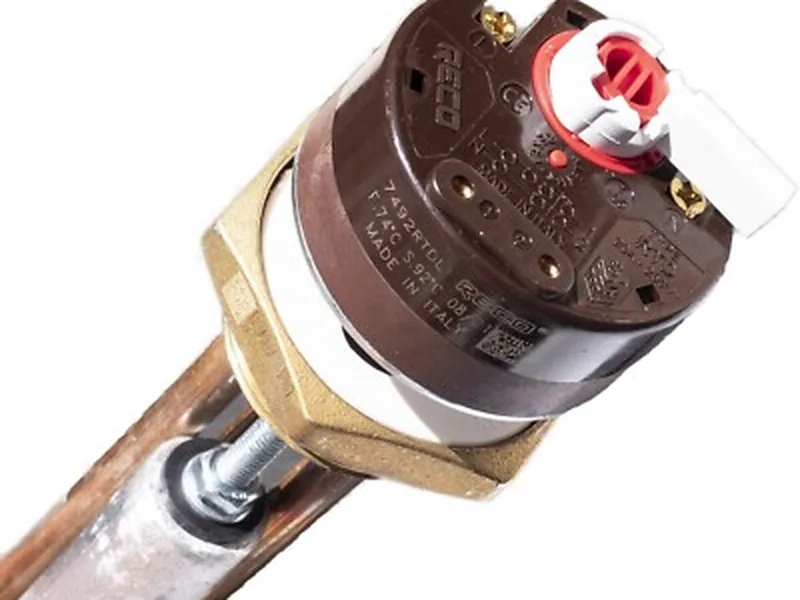
The thermostat is the part of your water heater you interact with most and understand least. You set a dial to 120°F and trust that the water obeys. When it does not — showers that scald, water that never quite gets hot, a heater that runs constantly — the thermostat is a prime suspect. On electric heaters especially, thermostat failure mimics other problems so convincingly that parts get replaced unnecessarily while the real culprit keeps misbehaving.
This guide explains what water heater thermostats do, how they fail, how to tell thermostat trouble from element trouble, and what replacement involves — so whether you DIY or call a professional, you are working from accurate diagnosis rather than guesswork.
What the Thermostat Does
On an electric water heater, two thermostats (upper and lower) each control their paired heating element. The upper thermostat has priority: it heats the top of the tank first, then passes power to the lower thermostat for the main volume. Each thermostat senses tank temperature through direct contact with the tank wall and switches its element on and off to hold the set temperature.
On a gas heater, the thermostat is integrated into the gas control valve — the dial on the valve body. It meters the burner rather than switching an element, but the job is the same: call for heat when water is below the setpoint, stop when it reaches it. Gas thermostat problems usually mean gas valve service rather than a separate part swap.
Symptoms of a Failing Thermostat
- Water too hot — scalding at the tap. A thermostat stuck closed keeps the element or burner firing past the setpoint. This is the dangerous failure: check for it immediately and shut the heater down if water is dangerously hot.
- Water never gets hot enough. A thermostat stuck open, miscalibrated, or set wrong never calls for enough heat. Rule out someone bumping the dial before assuming failure.
- Hot water runs out fast. If the lower thermostat fails, the lower element never fires — the top of the tank heats (upper thermostat works) but the main volume stays cold. Identical symptom to a failed lower element, which is why testing matters.
- Heater runs constantly or cycles oddly. A thermostat with a failed differential (the gap between on and off temperatures) short-cycles or never satisfies.
- The high-limit (ECO) switch keeps tripping. The emergency cutoff trips when water overheats — often because the thermostat failed to stop heating. Resetting the ECO without fixing the thermostat just repeats the cycle.
Overheating from a failed thermostat also shows up at the TPR valve — if the relief valve starts discharging alongside scalding water, shut the heater down and treat it as urgent.
Thermostat vs. Element: Telling Them Apart
This is the diagnostic fork that matters. Both failures cause "no hot water" or "not enough hot water," but the tests differ. With power safely off and verified, a multimeter checks element resistance (a failed element reads open or shorted) and thermostat continuity (a working thermostat shows continuity when calling for heat, none when satisfied). A visual check helps too: thermostats pressed loosely against the tank wall — not flat and tight — read temperature inaccurately and misbehave without being electrically "failed."
The practical rule: test, do not guess. Replacing an element when the thermostat was the problem (or vice versa) wastes the service call. This is routine work in electric water heater repair — diagnosis first, parts second.
What Replacement Involves
On electric heaters, thermostat replacement is among the simpler repairs: power off at the breaker (verify dead), remove the access panel and insulation, disconnect the wires (photo first for reference), unclip the old thermostat from the tank wall, clip the new one on flat and tight, reconnect wires, replace insulation and panel, restore power. No draining required — the thermostat sits outside the tank. The critical details are using the correct replacement model and ensuring full, flat contact with the tank wall.
Many technicians replace both thermostats when one fails on an older heater — they have lived identical lives, and the incremental cost during one visit beats a second call months later. If sediment, a depleted anode rod, or an aging tank are also in the picture, a broader water heater maintenance assessment during the visit keeps small problems from stacking.
Safety Notes Worth Respecting
Electric water heaters run on 240 volts — enough to kill. Breaker off is not enough on its own; verify with a tester, because mislabeled panels are common. On the hot-water side, a failed thermostat that overheats water creates scalding and pressure hazards — if your tap water is suddenly dangerously hot, shut the heater off at the breaker and do not use hot water until it is fixed. And never bypass or disable the high-limit ECO switch to "get by" — it is the last line of defense when the thermostat fails.
Upper vs. Lower Thermostat: Which One Failed?
Electric water heaters have two thermostats — upper and lower — working as a team, and they fail with different signatures. The upper thermostat is the boss: it controls the upper element and decides when the lower thermostat gets power at all. The lower thermostat only runs its element when the upper is satisfied. This hierarchy is the key to diagnosis.
Upper thermostat failure usually means no hot water at all, or water that is scalding regardless of the dial setting. Because the upper controls the whole sequence, its failure shuts down the system or removes temperature regulation entirely. A tripped reset button (the red button on the upper thermostat) is its frequent companion — the high-limit safety trips when the thermostat stops regulating.
Lower thermostat failure gives you some hot water that runs out fast — the upper element heats the top of the tank, but the lower never kicks in to heat the full volume. Showers start fine and go cold halfway through. This pattern is easily confused with a dead lower element, and indeed the two fail together often enough that technicians test both.
The practical upshot: "no hot water" points up, "not enough hot water" points down. But thermostats and elements are tested as a system — a multimeter check of both thermostats and both elements takes minutes and prevents replacing the wrong part. Given that thermostats are inexpensive, many technicians replace both thermostats and both elements as a set on older heaters, resetting the entire control system at once rather than chasing sequential failures.
Testing a Thermostat With a Multimeter (Safely)
Thermostat testing is a homeowner-possible job only if you are rigorous about electrical safety — 240 volts at the water heater can kill. If you are not completely comfortable working around high voltage with the power verified off, this is a professional job, full stop.
The procedure: switch off the double-pole breaker for the water heater, then verify with a non-contact voltage tester that power is truly off at the heater — breakers can be mislabeled. Remove the access panels and insulation to expose the thermostats. With a multimeter set to continuity or resistance, test across the thermostat terminals: a functional thermostat shows continuity when calling for heat (tank below setpoint) and open circuit when satisfied. Test at a known state — run some hot water first so the tank is below the setpoint and the thermostat should be calling.
Also inspect visually: scorch marks, melted plastic, or a thermostat that is physically loose on the tank wall all indicate failure regardless of meter readings. And check the reset button — if it has tripped, reset it once and monitor. A reset that trips again within days means the thermostat is not regulating and needs replacement, not another reset. When in doubt at any step, stop and call — a service visit for thermostat diagnosis is quick and safe.
Why New Thermostats and Elements Are Often Replaced Together
Homeowners sometimes balk when a technician recommends replacing thermostats and elements as a set — it can feel like upselling. It is usually good practice, and here is why. Thermostats and elements age together in the same harsh environment: heat cycling, sediment, and Florida humidity. When one fails at year nine, the others are living on borrowed time, and each separate service call costs nearly as much as the parts combined.
There is also a diagnostic reality: a failing thermostat can kill an element (by overheating it) and a failing element can mimic a thermostat problem. Replacing only the obviously dead part sometimes reveals the second failure a month later — another service call, another round of draining. Doing the full set resets the entire heating system to known-good in a single visit.
The economics favor the bundle on heaters in the 8-to-12-year range. The parts are inexpensive; the labor is the cost. One visit replacing all four components (two thermostats, two elements) typically costs little more than a single-component call and buys years of reliable operation. On a heater past twelve years with other symptoms, though, the same logic flips toward replacement — there is no sense in rebuilding the heating system of a tank that is itself failing.
Water Temperature Trouble in Valrico?
Scalding, lukewarm, or running out fast — Water Heater Leak Repair Works diagnoses thermostat and element problems accurately. Call for a free estimate.
Frequently Asked Questions
What temperature should I set my water heater to?
120°F is the standard recommendation — hot enough for household needs, cool enough to reduce scalding risk and slow sediment and corrosion. Higher settings also shorten component life.
Why does my high-limit switch keep tripping?
Because water is overheating, which usually means the thermostat is not shutting off the heat. Repeated ECO trips are a thermostat-failure symptom, not a switch problem — find the overheating cause.
Can a bad thermostat cause a leak?
Indirectly: chronic overheating stresses the tank, accelerates corrosion, and makes the TPR valve discharge repeatedly. Over time that stress contributes to tank and fitting failures.
Should I replace the upper or lower thermostat?
Test both. No hot water at all implicates the upper; fast-depleting hot water implicates the lower. On heaters past six to eight years, replacing both in one visit is common sense.
Is thermostat replacement a DIY job?
For those comfortable with 240-volt electrical work and strict lockout verification, yes — it is one of the simpler heater repairs. If any part of "verify dead with a tester" feels uncertain, call a professional.