Published: 2026-10-10
Water Heater Leak Repair Cost Factors Explained
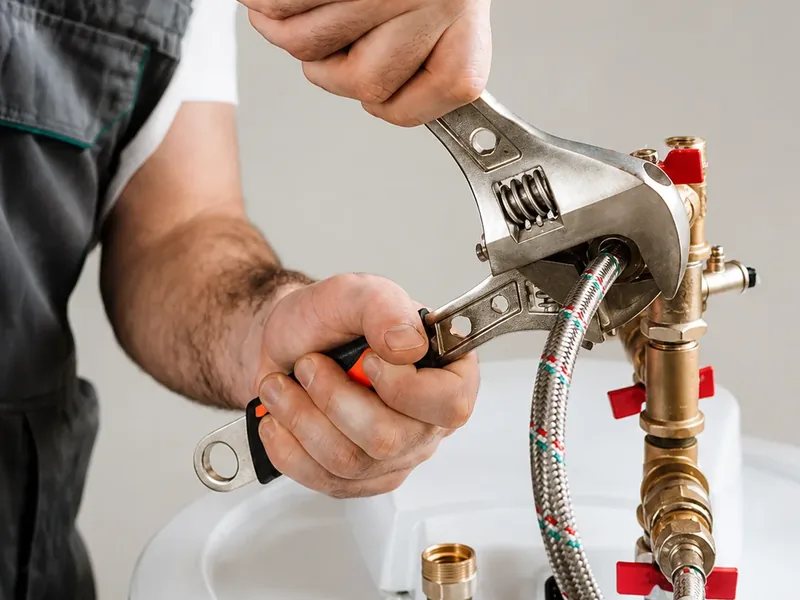
"How much will this cost?" is the first question every homeowner asks about a water heater leak, and it is the hardest to answer honestly without seeing the heater. A dripping supply fitting and a ruptured tank are both "water heater leaks," but they live in entirely different cost universes. This guide will not quote you a number — any site that does, sight unseen, is guessing. Instead, it explains what drives the cost up or down, so you can understand any estimate you receive and spot the factors that matter.
The Single Biggest Cost Factor: Where the Leak Is
Leak location determines everything. Leaks divide into two categories with a bright line between them:
- Fitting and component leaks — supply connections, the drain valve, the TPR valve, element gaskets, the anode port. These are part replacements: a valve, a gasket, a fitting, plus labor. They are the least expensive repairs because the tank itself is sound.
- Tank-body leaks — water from the tank walls, seams, or base. The tank cannot be patched reliably; the repair is a full water heater replacement. This is the most expensive outcome, encompassing the new unit, installation labor, code-required updates, and disposal of the old heater.
That is why the first thing a technician does is locate the source precisely. The cost conversation cannot start until the location is known — and any estimate given before that is fiction.
Factors That Push Repair Costs Up or Down
Heater type and size. Larger tanks and tankless units involve more labor and pricier parts. Gas units add venting and gas-line considerations; electric units are generally simpler to service.
Accessibility. A heater in an open garage is quick to service. One in a cramped attic, a tight closet, or behind stored belongings takes longer — labor time is a real cost driver. Clearing access before the technician arrives genuinely helps.
Age and overall condition. A five-year-old heater with a failed valve is a straightforward part swap. A twelve-year-old heater with the same failed valve raises the repair-versus-replace question — spending on a repair when replacement is months away anyway is worth weighing honestly.
Code and permit requirements. Replacements in many jurisdictions require permits and must meet current code: expansion tanks on closed systems, proper venting, drain pans, seismic strapping where applicable. Bringing an old installation up to current code adds legitimate cost — and legitimate protection.
Timing. Emergency and after-hours service costs more than scheduled visits. A leak discovered at 9 p.m. that can safely wait until morning (water shut off, heater down) saves the emergency premium. Knowing how to stabilize the situation — see our emergency shutoff guide — is literally money-saving knowledge.
Water damage. The repair cost and the damage cost are separate bills. A leak caught in a drain pan costs a part; the same leak undiscovered for a week costs a part plus drywall, flooring, and possibly mold remediation. Early detection is the least expensive "repair" there is.
Repair vs. Replace: The Economic Decision
The classic rule of thumb: when a repair approaches a substantial fraction of replacement cost on an aging heater, replacement wins. But the real calculus is broader. A new heater brings a fresh warranty, current efficiency, and a decade-plus of expected service. A repair on an old tank buys uncertain time — it may run years, or the next fitting may fail next month.
Consider replacement when the tank itself leaks (no choice), the heater is past ten years with declining performance, repairs are becoming frequent, or efficiency gains matter to you. Consider repair when the heater is under eight years, the tank is sound, and the failed part is isolated. An honest assessment from our water heater leak repair team will lay out both options with real numbers for your specific heater — not rules of thumb.
Getting an Estimate You Can Trust
A trustworthy estimate is itemized and specific: the diagnosed source, the exact work proposed, parts and labor separated, and any code-required additions listed — not bundled into vagueness. Be cautious of quotes given without an on-site look, prices that seem disconnected from the described work, and pressure to decide immediately. A reputable company explains the why behind the number and offers repair and replacement options where both are viable.
It is also worth asking what the estimate includes beyond the immediate fix: haul-away of the old unit, permit handling, and warranty terms on parts and labor. The lowest quote that omits these is rarely the lowest total. When you are ready for real numbers on your heater, our water heater installation and repair estimates are free, itemized, and pressure-free.
The Hidden Cost of Waiting
The most expensive water heater leak is the one ignored. A weeping fitting becomes a burst fitting; a pinhole becomes a rupture; a damp spot becomes mold remediation. Every week of delay adds risk without reducing the eventual repair cost — the part costs the same, but the water damage compounds. If cost is the reason for waiting, consider that a free estimate costs nothing and turns an unknown into a plan. Delay is the only option guaranteed to make the final bill larger.
What Drives the Price Up (and Down)
Water heater leak repair costs vary widely because "leak repair" covers everything from a five-dollar washer to a full replacement. Understanding the cost drivers helps you read any quote intelligently. The dominant factor is what is leaking: a drain valve, TPR valve, or fitting is a component repair — modest parts, an hour or two of labor. A tank-wall leak is not a repair at all; it is a replacement, which moves the conversation to equipment plus installation.
Heater type and age come next. Standard tank heaters use inexpensive, universal parts; tankless units and heat pump heaters use pricier proprietary components. Older heaters cost more to service in practice — corroded fittings seize, parts may be discontinued, and every seized connection adds labor time. Location matters too: a garage heater with clear access is the cheapest to service; an attic unit or a closet heater buried behind stored belongings adds time and difficulty.
Timing is the factor homeowners control most. A scheduled daytime repair costs the standard rate. The same repair at midnight on a Saturday carries an after-hours premium — fair, given the technician and truck it requires, but avoidable if the issue was addressed when it was a drip rather than a flood. Code upgrades can add to a replacement quote: Florida code may require an expansion tank, drain pan, or venting updates that the old install lacked. These are legitimate, non-optional additions — and they are far cheaper as part of a planned replacement than as emergency corrections.
Repair Quotes: What a Good Estimate Includes
A trustworthy quote is itemized and specific. It should name the diagnosed problem (not just "fix leak"), list the parts to be replaced with their specifications, state the labor scope, and call out any code-required additions separately from optional upgrades. It should also state what happens if the diagnosis proves wrong — for example, if opening up a "fitting leak" reveals tank failure underneath.
Ask these questions before authorizing work: Is this a repair or are we near replacement territory, and what is the age-based reasoning? Are the parts under manufacturer warranty, and is labor covered by an installer warranty? What code items does this job require? What is the total if the worst case proves true? A technician who answers plainly is a technician you can trust; evasiveness about pricing is the reddest flag in home services.
Get the quote in writing before work begins, and be wary of quotes given sight-unseen over the phone — no honest provider prices a leak they have not looked at, because the range between "washer" and "replacement" is too wide to guess. The diagnostic visit itself should have a clear, stated fee that is credited toward the repair if you proceed. That structure aligns everyone's incentives: you get an honest diagnosis, and the provider earns the repair.
When the Cheapest Quote Is the Most Expensive
The lowest bid on a water heater job deserves scrutiny, because the ways to cut corners are also the ways to create the next leak. Common ones: reusing the old flex connectors and shutoff valve instead of replacing them (they are wear items — reinstalling a ten-year-old connector is scheduling a future leak), skipping the expansion tank on a closed system, omitting the drain pan, venting a gas unit with the old deteriorated flue, and setting the new heater on the old sediment without flushing the lines.
Each shortcut saves a little today and risks a lot tomorrow. A skipped expansion tank means pressure spikes that kill the new heater early. Reused connectors are the most common source of "new heater, new leak" callbacks. Unpermitted work can complicate insurance claims and home sales — and in Florida, water heater replacements generally require a permit and inspection, which the cheapest quotes quietly omit.
The value comparison is not quote versus quote — it is quote versus the next ten years. A properly installed heater with new connectors, correct expansion control, a drain pan, and code-compliant venting costs more on day one and dramatically less over its life. When comparing bids in Valrico, line up the scopes, not just the totals: the quote that includes the unglamorous details is usually the honest one, and the cheapest total with the thinnest scope is usually the most expensive heater you will ever buy.
Want Real Numbers for Your Heater?
Free, itemized estimates — repair and replacement options explained honestly. Call Water Heater Leak Repair Works in Valrico today.
Frequently Asked Questions
Why won't anyone give me a price over the phone?
Because "water heater leak" describes a symptom, not a diagnosis. A phone quote would have to assume the least expensive scenario — and if the reality is a tank replacement, that quote was never real. On-site diagnosis is the only honest basis for pricing.
Is it cheaper to repair or replace a leaking water heater?
Repair is cheaper when the tank is sound and the heater is relatively young — a valve or fitting swap. Replacement is the only option for tank-body leaks, and often the smarter economics on heaters past ten years.
Does homeowner's insurance cover water heater leak repairs?
Insurance typically covers resulting water damage from sudden failures, not the heater repair or replacement itself — and gradual leaks from neglected maintenance are often excluded. Check your policy and document leaks promptly.
Can I save money by buying the heater myself?
Sometimes on the unit price, but you lose the installer's warranty coordination, may buy the wrong size or type, and still pay full labor. Many installers also will not warranty customer-supplied equipment. Get the itemized comparison before deciding.
What makes one estimate much higher than another?
Scope differences: code upgrades, permit handling, haul-away, warranty length, and whether the quote is repair versus replacement. Compare line items, not bottom lines — the lowest total often omits the most.