
Water Heater Leak vs. Condensation: How to Tell the Difference
Before you pay for a repair, make sure it's actually a leak — Florida garages fool everyone.
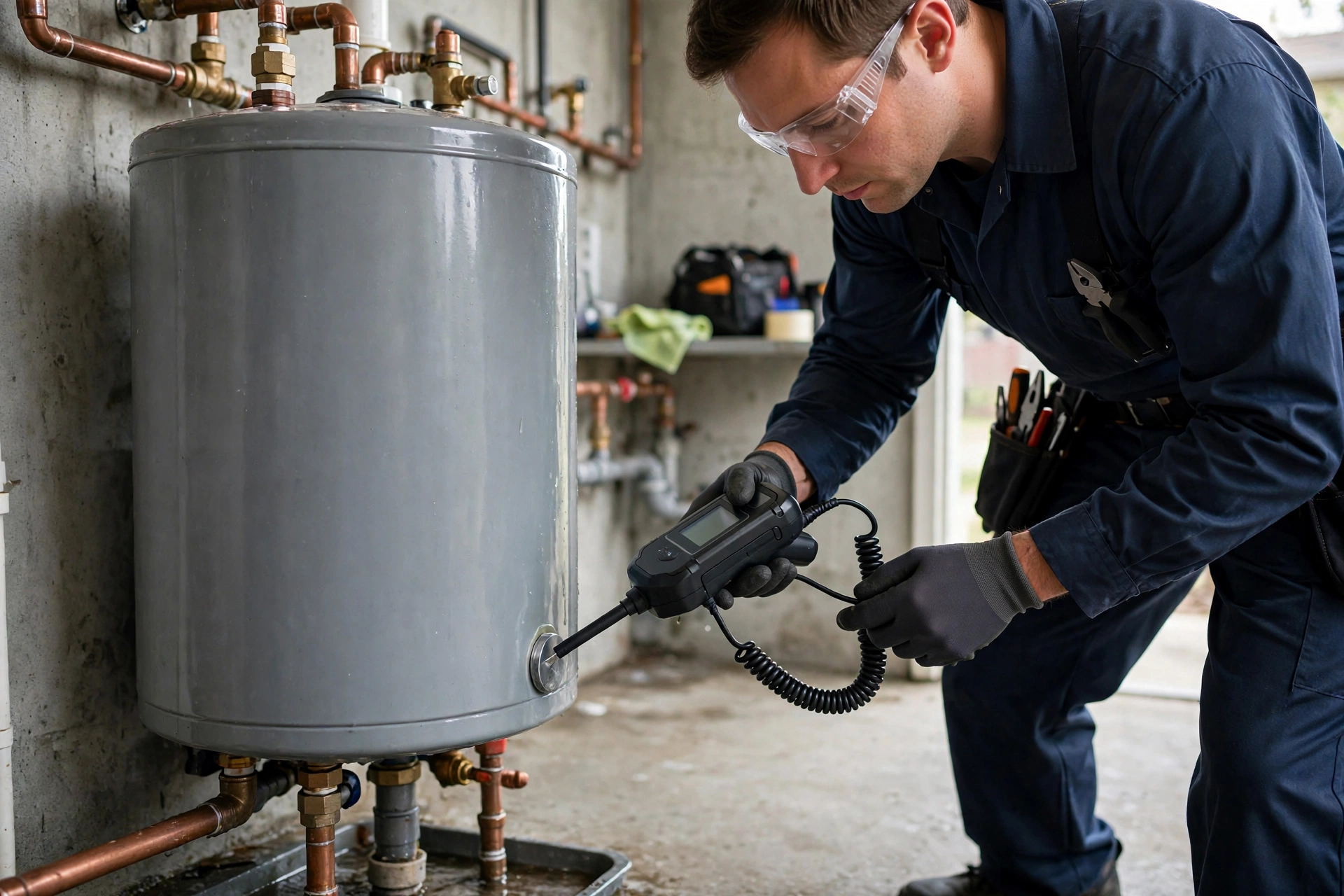
Half the "leaking water heater" calls we get in Valrico turn out to be condensation. Humid garage air hitting cold pipes and tank surfaces creates real puddles that look exactly like leaks. Here's how to tell them apart before you spend money.
The Condensation Profile
Condensation forms on the cold water inlet pipe and the upper tank exterior, worst on humid mornings and after the AC has been blasting. The water is clean, the tank fittings are dry underneath the surface moisture, and the puddle doesn't grow when hot water isn't being used.
The Real Leak Profile
True leaks leave mineral trails — white, green, or rust-colored crust at fittings. Water reappears in the same spot after drying, often growing after hot-water use (heat expands cracks). Drips from the T&P discharge pipe or drain valve are never condensation.
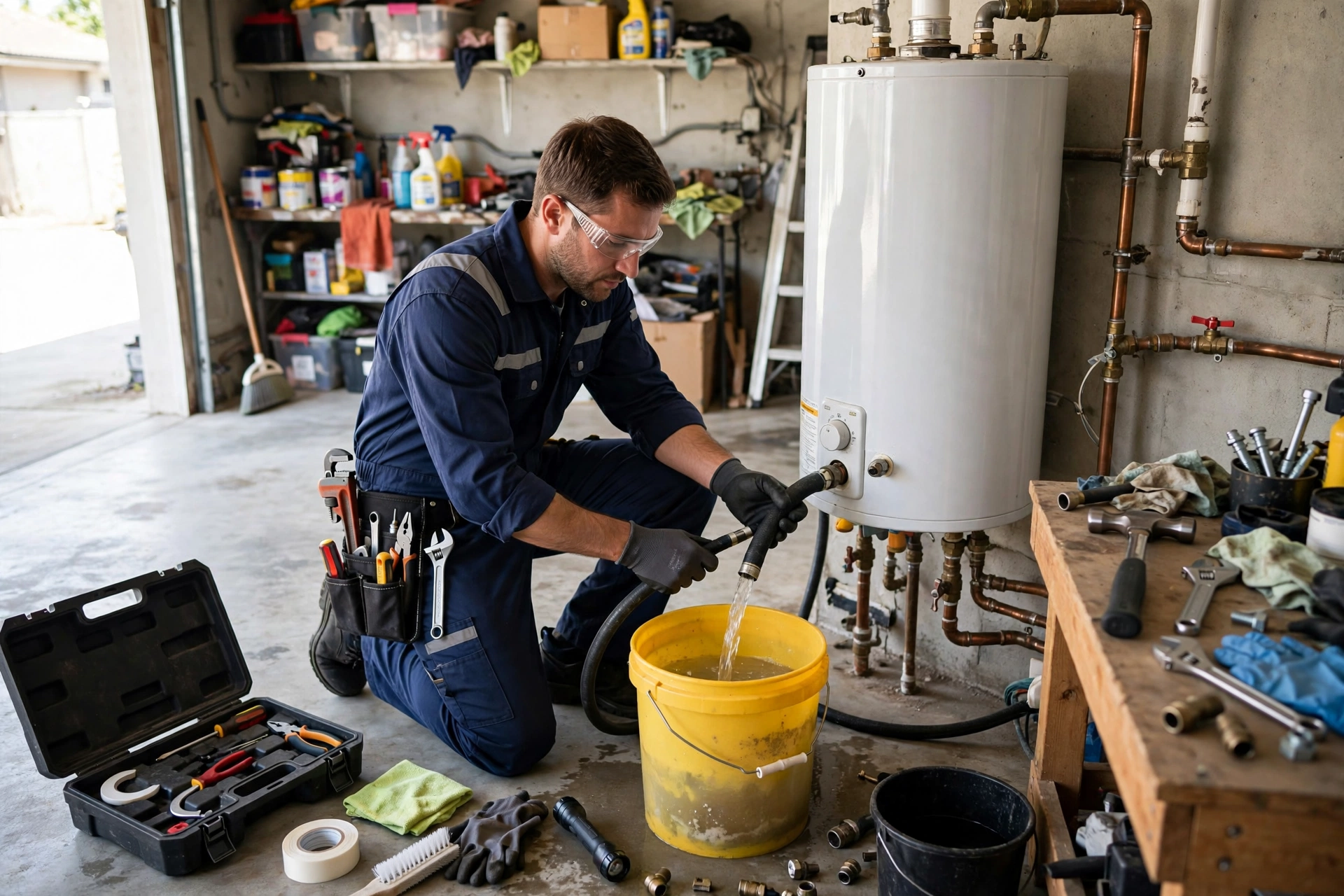
The Paper Towel Test
Dry everything thoroughly with towels. Wrap suspect fittings in dry paper towels and check in two hours without using hot water. Wet towels at a joint = leak. General dampness on cold surfaces with dry joints = condensation.
Fixing Condensation Anyway
Even harmless sweating keeps garages damp and corrodes fittings over time. Insulating the cold-water inlet pipe and improving garage ventilation usually solves it. If you're unsure after testing, our leak detection service settles it definitively — and the diagnosis fee is credited toward any repair.
Need Help With a Leak Right Now?
Same-day service across Valrico and the Tampa Bay area.
Call (833) 713-2101 Now