Published: 2026-10-10
What to Do When Your Water Heater Leaks
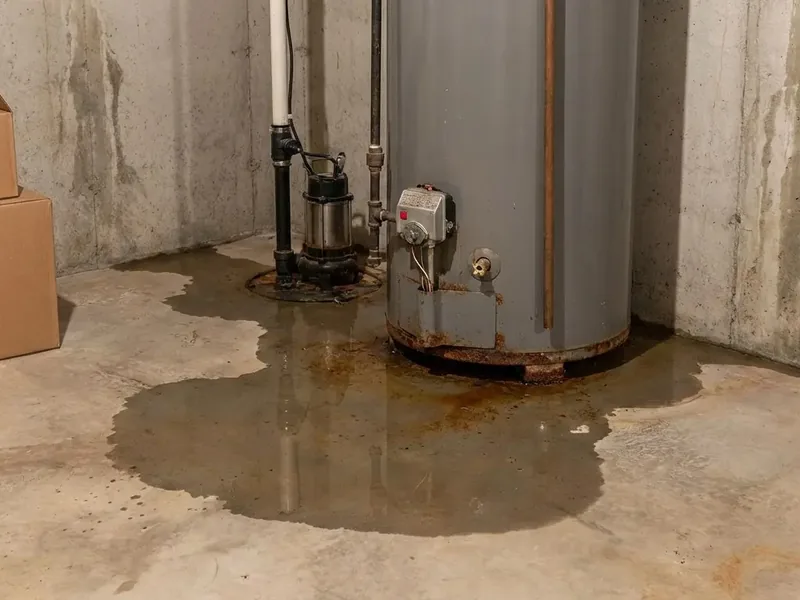
Water is coming from your water heater. Maybe a lot, maybe a little — either way, the next thirty minutes determine whether this becomes a repair bill or a repair bill plus a renovation. Most homeowners lose those minutes to uncertainty: Is this serious? What do I touch first? Who do I call? This guide removes the uncertainty with a clear sequence — what to do right now, what to do next, and what not to do at all.
Read it now, before you need it. In an actual leak, you will not be browsing — you will be acting from what you remember.
Right Now: The First Five Minutes
- Check for immediate danger. Smell gas near a gas heater? Leave the area and call for help from outside — do not touch anything. See water near the breaker panel, outlets, or the heater's wiring? Do not touch electrical components. No gas smell and no electrical contact? Proceed.
- Find the source. Look at the top fittings, the TPR discharge pipe, the drain valve, and the tank base. Knowing the location drives every decision after this.
- Close the cold-water inlet valve — the valve on the pipe entering the top of the heater, turned clockwise. This stops feeding the leak and is the single highest-impact action.
- Shut off the heat. Electric: flip the water heater's dedicated breaker off. Gas: turn the control knob to "off."
- Open a hot-water tap at a nearby sink to relieve pressure.
If the inlet valve will not budge, use the main house water shutoff instead — at the meter box or where the line enters the home. A stuck valve is a problem for later; stopping the water is the problem for now.
Next: Contain, Document, Decide
Contain. Towels around the base, a bucket under a dripping fitting, valuables and stored items moved away from the water's path. If the heater sits in a drain pan, confirm the pan's drain line is flowing — a clogged pan drain turns containment into a wading pool.
Document. Photograph the leak source, the water's extent, and the heater's serial label (it holds the age). Note the time, whether the water is hot, and how fast it is coming. Photos taken now are invaluable — for the technician's diagnosis, and for any insurance claim.
Decide: emergency call or scheduled visit. Emergency — call now — if water is flowing (not dripping), the tank body itself is leaking, you smell gas, water is near electrics, the TPR is discharging heavily, or flooding is spreading. Schedule a prompt visit if it is a contained drip from an identifiable fitting with no spreading. When in doubt, call and describe it — our emergency water heater repair line will tell you honestly which category you are in.
What NOT to Do
- Do not restore power or gas to a leaking heater. Electric elements burn out in seconds without full water coverage; a gas burner under a compromised tank is a hazard. Leave it off until a technician clears it.
- Do not cap or plug the TPR valve or its discharge pipe to "stop" the leak — if the TPR is the source, it is releasing for a reason.
- Do not ignore a "small" leak from the tank body. Tank leaks do not stabilize; they progress. A weep today is a rupture on its own schedule.
- Do not drain the tank completely unless instructed. A stabilized, partially full tank is fine. Draining is for specific repairs and evacuations — and on a compromised tank, let the technician decide.
- Do not use hot water normally until the heater is repaired and cleared. Cold water service is unaffected by shutting down the heater.
Hurricane Season: Leaks Under Storm Conditions
A leak during hurricane season carries extra weight. If a storm is approaching and your heater is leaking, escalate your response — a weeping fitting can fail completely under storm pressure fluctuations, and if you evacuate, nobody will be there to catch it. Shut the heater down fully (water off, power/gas off) before leaving, even for a leak that seems minor.
After a storm, inspect the heater before resuming normal use even if it was fine before: check for shifted connections, floodwater contact, new drips at fittings stressed by pressure events, and moisture in burner or electrical compartments. Post-storm leaks are common and often appear days after the weather clears. If flooding reached the heater, do not restart it — have it professionally inspected first.
Calling for Help: What to Say
When you call, lead with these five facts: (1) where the water is coming from, as precisely as you can; (2) whether it is a drip, trickle, or flow; (3) whether the water is hot; (4) the heater's age and whether it is gas or electric; (5) what you have already shut off. This takes thirty seconds and lets the technician arrive with the right parts and plan — often the difference between a single visit and two. Mention any hurricane or storm context too; it changes the priority assessment.
Once the immediate crisis is handled, the follow-up matters: a leak is information about your heater's condition. Ask the technician what caused it and what else is wearing — a water heater leak repair visit should end with you understanding your heater's health, not just a dry floor.
Protecting Your Home While You Wait for Help
You have shut off the water and power or gas, and help is on the way. The next hour is about limiting damage, and small actions now prevent big repairs later. Start with the water: mop up or wet-vacuum standing water promptly — in Valrico's humidity, water left standing starts feeding mold within 24 to 48 hours. Pull back rugs and move boxes, electronics, and anything absorbent away from the wet area. In garage installations, remember that water migrates: check the adjacent rooms inside the house, because slab floors wick water under walls farther than you expect.
Get air moving. Open the garage door or windows, set up fans blowing across the wet area, and if you have a dehumidifier, run it. Florida's ambient humidity fights drying, so active airflow matters more here than in drier climates. For water that reached drywall, remove baseboards to let the wall cavity dry — trapped moisture behind baseboards is a mold farm. Do not seal the area up "to contain it"; drying requires ventilation.
Document everything before you clean too thoroughly: photograph the leak source, the water's extent, and any damaged belongings for insurance. Then keep the area accessible for the technician — clear the path to the heater and make sure the work area is safe. If water reached electrical outlets or the breaker panel area, stay clear and mention it when help arrives. And resist the urge to restart the heater "just to see" — a leaking heater that gets re-pressurized can fail worse the second time.
What Not to Do: Common Mistakes That Make Leaks Worse
Panic drives bad decisions. The most common mistake is ignoring a small leak because it seems manageable — the drip you put a bucket under in March is the ruptured seam in August. Small leaks from tanks do not heal; they grow. The second mistake is the mirror image: overtightening a leaking fitting. Cranking a wrench on a weeping connection often cracks the fitting or the tank port, converting a reseal job into a replacement.
Do not cap or plug the TPR discharge pipe to stop its dripping. The TPR valve is a safety device relieving dangerous pressure or temperature; blocking its outlet converts a pressure problem into an explosion risk. If the TPR is discharging, the correct response is diagnosing the cause — usually thermal expansion or overheating — not silencing the messenger.
Do not use stop-leak chemicals marketed for water heaters. They do not repair tank walls, they contaminate your hot water supply, and they can clog valves and fixtures throughout the house. Do not relight a gas heater that sat in floodwater — submerged controls and gas valves are unreliable and dangerous until professionally assessed. And do not delay the call hoping the leak stops on its own. Every hour of active leaking is more water in your walls, more mold food, and a bigger repair bill. The right move is always the same: shut it down, contain the water, document, and call.
Water Heater Leaking Right Now in Valrico?
Shut the water off, kill the power or gas, then call Water Heater Leak Repair Works. We will talk you through it and get a technician out fast.
Frequently Asked Questions
Should I turn off the water heater if it is leaking?
Yes — close the cold-water inlet valve and shut off power (breaker) or gas (control knob to off). This stabilizes nearly every leak situation and prevents further damage while you arrange repair.
Can I still use cold water if the heater is shut down?
Yes. Shutting down the water heater affects only hot water. Cold water service to the house continues normally as long as the main supply is on.
How do I know if the leak is an emergency?
Flowing water, tank-body leaks, gas odor, water near electrics, heavy TPR discharge, or spreading flooding are emergencies. A contained drip from an identifiable fitting can usually wait for a scheduled visit — but call and ask if you are unsure.
Will the leak get worse if I wait until morning?
With the inlet valve closed and heat off, a stabilized leak generally holds. Without those steps, yes — supply pressure keeps feeding it. The shutdown sequence is what makes waiting safe.
What should I tell the repair technician?
The leak's location, drip vs. flow, hot or cold water, the heater's age and fuel type, and what you have shut off. Photos of the source and the serial label help enormously.
My heater leaked during a hurricane evacuation. What do I check on return?
Do not just turn everything back on. Inspect for new leaks at all fittings, check the TPR valve, look for floodwater contact or shifted connections, refill the tank completely, and only then restore power or gas. When in doubt, have it inspected first.