Published: 2026-10-10
How Long Do Water Heaters Last? Lifespan Guide
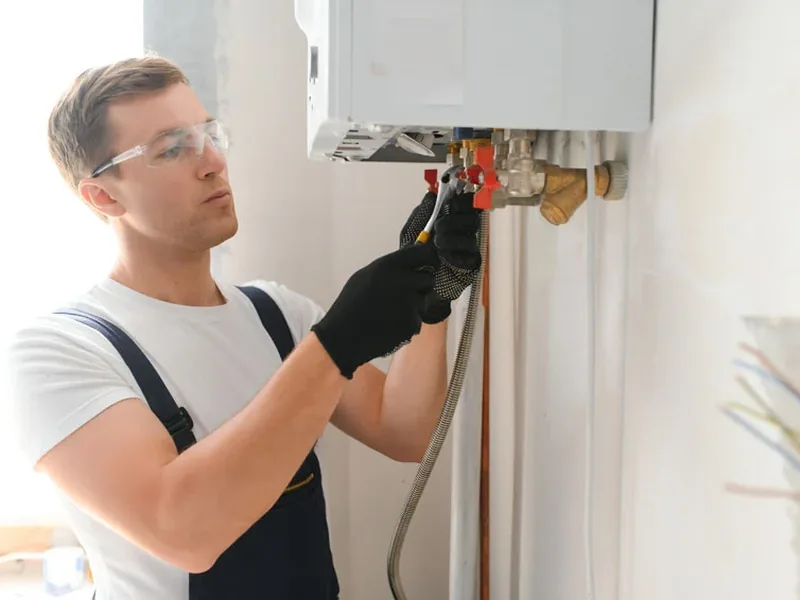
Every water heater has an expiration date written in chemistry, not ink. Steel corrodes, scale accumulates, parts fatigue — and in Valrico's hard water and humid heat, the clock runs faster than the national averages printed on the box. Knowing the realistic lifespan of your type of heater, what shortens it, and how to read the end-of-life signs turns replacement from a crisis into a plan.
Typical Lifespans by Type
- Conventional tank (gas or electric): 8–12 years. The national figure often quoted is 10–15, but Florida's hard water and heat pull the realistic range down. A maintained tank heater in Valrico reaching 12 is doing well; an unmaintained one may fail at 7 or 8.
- Tankless: 15–20 years. No stored water means no tank corrosion, but the heat exchanger still faces scale and thermal stress. The 20-year end assumes disciplined descaling — neglected units in hard water die much younger.
- Heat pump (hybrid) water heaters: 10–15 years. Growing in Florida popularity for their efficiency; lifespan tracks tank heaters with additional electronic components to consider.
These are medians, not guarantees. Maintenance quality moves individual heaters dramatically within — and beyond — these ranges.
What Shortens Life in Valrico
Hard water sediment is the dominant local factor. Scale insulates elements and tank bottoms, causing overheating that stresses steel and cracks glass lining. Depleted anode rods remove corrosion protection years before the tank would otherwise need it — the most common reason tanks die "early." High temperature settings accelerate every chemical process inside the tank; every 10°F above 120°F costs life. Pressure spikes from closed systems without expansion control fatigue the tank and fittings with each cycle. Humid, hot installation locations — Florida garages and attics — corrode external components and, in attics, bake the heater year-round. Storm damage from flooding or surges can end a heater's life in a day regardless of age.
Countering these is straightforward: flush sediment twice yearly, check the anode rod every few years, keep the thermostat at 120°F, maintain the expansion tank, and give the heater regular professional maintenance. Each habit buys years; together they can double a neglected heater's life.
Reading the Age: The Serial Number
Most homeowners do not know their heater's age. The serial number label holds it — manufacturers encode the manufacture date in the first characters (formats vary by brand, but the pattern is usually a letter for month and digits for year, or a straightforward date code). If the label is unreadable from age and corrosion, that itself is information about the heater's condition. Once you know the install date, compare against the lifespan ranges above: a 9-year-old tank heater in Valrico is in its final third, and planning should start now.
End-of-Life Signs
- Rusty or discolored hot water that persists — the tank interior is corroding.
- Rumblings and popping that flushing no longer quiets — sediment has hardened into a permanent insulating layer.
- Recurring part failures — elements, thermostats, valves failing in sequence signal systemic decline.
- Moisture at the tank base or seams — the steel is giving way; replacement is no longer optional.
- Rising energy use for the same hot water — efficiency has degraded beyond recovery.
- Age past 12 years (tank) with any symptoms at all — the economics flip from repair to replace.
One sign overrides all deliberation: any leak from the tank body itself. That heater is done, regardless of age.
Planning Replacement Before Failure
The least expensive replacement is the planned one. Emergency replacements cost more (after-hours labor, rushed decisions, water damage repair) and force choices under pressure. Starting the conversation at year 8–10 for a tank heater — getting an assessment, understanding your options, watching for seasonal promotions on installations — means the eventual swap happens on a Tuesday morning, not during a holiday weekend flood.
Replacement is also an upgrade opportunity: current models are more efficient than decade-old units, and switching fuel types or going tankless can be evaluated without crisis pressure. Our water heater installation consultations cover sizing, type selection, and code requirements specific to your home — so when the time comes, the decision is already made.
Brand and Model Tiers: What the Warranty Length Tells You
Water heater warranties — 6, 9, or 12 years on the tank — are more than paperwork; they are a rough quality ranking. Manufacturers do not extend warranties out of generosity. A 12-year tank typically has thicker steel, a larger or dual anode rod, and better glass lining than its 6-year sibling from the same brand. The warranty length is the manufacturer's own statement about how long they expect the unit to survive.
In Valrico's hard water, the tier matters more than it does in soft-water regions. The better anode rod in a 9- or 12-year unit directly counteracts our most aggressive failure mechanism — corrosion — which is why the price premium for a longer-warranty tank often pays for itself here in extended service life. The cheapest 6-year tank in hard well water in Lithia is a false economy; the mid-tier unit with the better rod is the value play.
That said, no warranty tier survives neglect. A 12-year tank that is never flushed in our water can die before a maintained 6-year tank. Treat the warranty as a quality signal for the purchase decision, then maintain the unit as if the warranty did not exist — because the maintenance is what actually determines the lifespan. And register the warranty at installation; unregistered units can face shortened or complicated coverage exactly when you need it.
The Maintenance Habits That Add Years in Florida
The lifespan gap between a maintained and a neglected water heater in Florida is not subtle — it is the difference between seven years and twelve-plus. Four habits drive nearly all of it. Twice-yearly flushing removes the sediment that causes overheating, element death, and lining stress — the single highest-impact habit in our hard water. Anode rod inspection every 2 to 3 years, with replacement when depleted, maintains the corrosion protection the tank depends on; in Valrico water, rods are consumables, not lifetime parts.
Temperature at 120°F slows every damaging chemical process inside the tank — corrosion, scale formation, and lining stress all accelerate with heat. Every 10 degrees above 120 costs life, and most heaters ship set higher than necessary. Expansion tank maintenance — annual air-charge checks — prevents the cyclic pressure fatigue that cracks linings and loosens fittings over thousands of heating cycles.
None of these is difficult or expensive, and together they are transformative. Our maintenance service bundles all four into a single visit with dated records — the records matter because they also protect your warranty coverage. A heater with a maintenance log is a heater with a documented life story; when something eventually fails, that story is what gets warranty claims approved and replacement decisions made correctly.
Knowing When to Stop Repairing: The 50% Rule and Beyond
Every aging heater reaches a point where the next repair is the wrong investment. The standard framework is the 50% rule: if a repair costs more than half the price of replacement and the heater is past three-quarters of its expected life, replace. A $600 gas valve on a 12-year-old tank heater fails this test decisively — that money belongs in the replacement fund.
Beyond the rule, watch for the pattern of sequential failures. Elements, then a thermostat, then the TPR valve, then a fitting — each repair is individually reasonable, but together they signal systemic decline. The tank is telling you its components are aging out in cascade, and the tank wall itself is on the same timeline. Two significant repairs within a year on a heater past ten is the practical stop sign.
The counterpoint: do not replace a healthy heater on age alone. A well-maintained 10-year-old tank with a sound anode rod, clean flush water, and no symptoms has real life left, and replacing it early wastes both money and equipment. The decision should rest on condition plus age, not age alone — which is why an honest remaining-life assessment beats both "repair everything" and "replace everything" as a default. Start planning at year eight, decide on evidence, and never let a crisis make the choice for you.
How Old Is Your Water Heater?
If you are not sure — or if it is showing its age — get an honest remaining-life assessment. Call Water Heater Leak Repair Works for a free estimate in Valrico.
Frequently Asked Questions
What is the average life of a water heater in Florida?
Eight to twelve years for conventional tanks — below the national average — due to hard water sediment and heat. Tankless units reach 15–20 years with proper descaling maintenance.
Can maintenance really extend water heater life?
Significantly. Twice-yearly flushing, anode rod replacement, and pressure control address the specific mechanisms that kill Florida heaters early. Maintained heaters routinely outlast neglected ones by years.
Should I replace my water heater at 10 years even if it works fine?
Not automatically — a well-maintained 10-year-old heater with a sound tank and clean bill of health can keep serving. But start planning: get an assessment, understand your options, and do not be surprised when it is time.
Do tankless water heaters last longer in hard water?
Only with descaling maintenance. Without it, hard water kills tankless heat exchangers faster than it kills tanks. With it, 15–20 years is realistic.
Does a water heater warranty tell me its lifespan?
Roughly — longer-warranty models typically have better components (often a larger anode rod). But the warranty covers the tank against manufacturing defects, not the wear from your water conditions. Treat it as a quality signal, not a lifespan promise.