Published: 2026-10-10
Is a Water Heater Leak an Emergency? Find Out
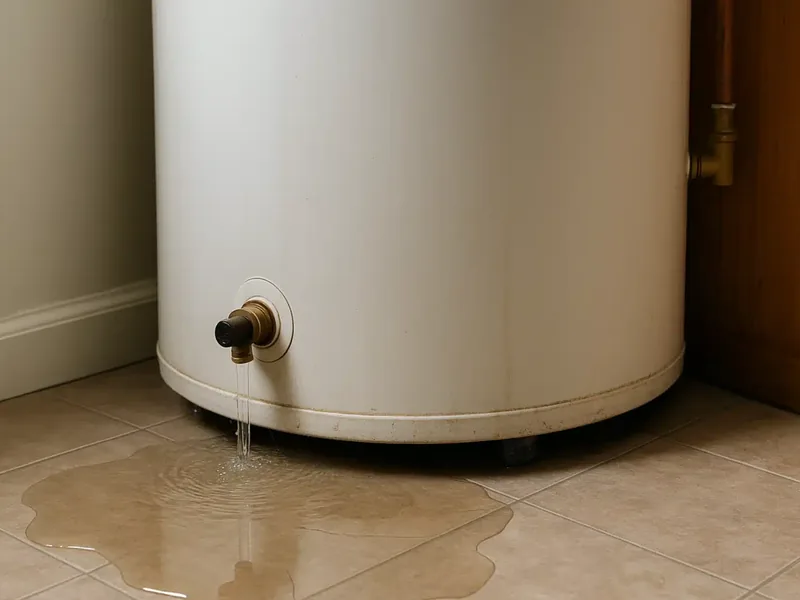
You find water under the water heater. Your pulse quickens — is this a mop-and-monitor situation or a call-someone-now emergency? The honest answer is that most water heater leaks start small and give you time, but a few demand immediate action. Knowing which one you are looking at saves you from both panic and complacency.
For Valrico homeowners, the stakes have a seasonal edge. A slow weep discovered during hurricane season, with a storm approaching and technicians booked solid, becomes urgent faster than the same weep in February. This guide gives you a clear triage framework: what makes a leak an emergency, what can wait for a scheduled visit, and what to do in the first ten minutes either way.
When It IS an Emergency
Treat the leak as an emergency — shut things down and call now — if any of these are true:
- Water is flowing, not dripping. A steady stream or spray from the tank, a fitting, or a burst supply line can put out tens of gallons per hour. Every minute matters.
- The tank itself is leaking. Water seeping from the tank body, seams, or base means the steel has failed. It will not heal, and rupture can follow.
- You smell gas near a gas water heater. Leave the area and call from outside — this is a gas emergency first and a water heater problem second.
- Water is contacting electrical components — the breaker panel, outlets, or the heater's wiring compartment. Electrocution risk is real.
- The TPR valve is discharging heavily or continuously. A valve dumping large volumes signals dangerous pressure or temperature. Shut the heater down.
- Flooding is spreading to finished rooms, toward valuables, or into wall cavities.
If any of these match, follow the shutdown steps in our emergency water heater repair guide: close the inlet valve, kill power or gas, and call. Do not wait to see if it gets worse.
When It Can Wait for a Scheduled Visit
Not every wet spot is a crisis. These situations deserve prompt attention — within days, not weeks — but not a midnight call:
- A slow drip from a fitting, valve, or connection that you can catch in a container, with no spreading.
- Light condensation on the tank or pipes during humid weather — common in Florida garages and often mistaken for a leak (see our leak-vs-condensation guide).
- A TPR valve that weeps occasionally then stops, with normal water temperature — often a pressure issue to diagnose, not an emergency.
- Minor moisture in the drain pan with a clear, slow source you have identified.
The key test: is the situation stable and contained? If yes, place a container, take a photo of the source for the technician, and schedule a visit. If it is growing, spreading, or you cannot find the source, escalate.
The First Ten Minutes: What to Do
- Look before you touch. Check for gas odor and for water near anything electrical. If either is present, keep your distance and call for help.
- Find the source. Top of the heater (fittings, inlet/outlet), the TPR discharge pipe, the drain valve, or the tank base — location determines everything.
- Close the cold-water inlet valve above the heater to stop feeding the leak.
- Shut off the heat — breaker off for electric, gas control to off for gas.
- Contain and document. Towels, buckets, photos. Note whether the water is hot and how fast it is coming.
- Decide: emergency call or scheduled visit using the lists above.
Our water heater leak detection service exists for the ambiguous cases — when there is moisture but no obvious source, professional diagnosis beats guessing.
Seasonal Factors That Raise the Stakes
Hurricane season (June–November) changes the calculus. A minor leak the week before a forecast storm deserves faster action: if you evacuate, a weeping fitting can become a burst line under storm pressure fluctuations, flooding an empty house for days. Shutting the heater down before you leave is cheap insurance. After a storm, inspect the heater before restarting — floodwater, power surges, and shifted connections all cause post-storm failures.
Summer humidity masks real leaks behind condensation, delaying discovery. Winter cold snaps — rare but real in Central Florida — can freeze exposed pipes and crack fittings on heaters in unconditioned garages. And snowbird season means many Valrico homes sit empty for months; a slow leak in an unoccupied house is discovered by a neighbor, not the owner. If you leave for the season, shut the heater down and consider having someone check the house periodically.
What the Technician Will Ask
When you call, have answers ready: Where exactly is the water coming from? Is it hot or cold? How fast — drip, trickle, or flow? How old is the heater (check the serial label)? Is it gas or electric? Have you shut off the water and power/gas? These five answers let the technician arrive with the right parts and a clear plan, which is the difference between one visit and two.
The 60-Second Triage: What to Check Before You Call
Water at the base of your heater triggers panic, but sixty seconds of observation will tell you — and us — how urgent the situation really is. Run through these checks in order.
Where is the water coming from? Crouch down with a flashlight. Water dripping from the TPR discharge pipe, a fitting at the top, or the drain valve points to a component issue — serious, but usually not a flood-in-progress. Water seeping from under the tank, from a seam, or pooling across the floor with no visible source above points to tank failure, which is the genuine emergency.
How fast is it? A slow drip you can contain with a towel is a different situation from a steady stream you cannot keep up with. If water is spreading across the floor faster than you can manage, skip the rest of the triage: shut off the water and power or gas now, following our emergency shutoff guide, then call.
Is it hot? Hot water at the leak site confirms it is coming from the tank or its connections rather than condensation or an adjacent source. Can you find the heater's shutoff? If yes, and the leak is more than a drip, close it — you have just converted an emergency into a scheduled repair.
Report what you found when you call: source location, flow rate, and whether you shut it off. That sixty seconds of triage gets you the right response — emergency dispatch or next-available appointment — instead of a guess.
What Emergency Service Covers (and What Can Wait Until Morning)
Emergency service exists for one purpose: stopping active damage. When we roll a truck at night or on a weekend in Valrico, the job is to shut things down safely, contain the water, stabilize the situation, and make the home safe until a full repair can be scheduled. That might mean replacing a burst connector, capping a failed valve, or safely decommissioning a ruptured tank.
What emergency service is not: a full heater replacement at 2 a.m., a leisurely diagnostic of a lukewarm shower, or a discounted version of daytime work. After-hours work carries a premium — the technician, the truck, and the parts sourcing all cost more outside business hours — and some jobs genuinely cannot be completed until suppliers open. A fair emergency provider tells you this upfront: what gets fixed tonight, what gets stabilized, and what happens on the follow-up visit.
The situations that can usually wait until morning: a slow drip from the drain valve with the water shut off, a weeping TPR valve with no flooding, lukewarm water with no leak at all, and any issue you have already contained by shutting off the heater's water supply. If you have stopped the water, you have stopped the emergency — the repair becomes a scheduled visit. That single step, closing the heater's shutoff valve, is the difference between a midnight call and a morning appointment for a surprising number of Valrico leaks.
After-Hours Leaks in Valrico: What to Expect When You Call
Knowing the process removes the stress. When you call after hours, expect a few direct questions: where is the leak, how fast is the water, have you shut off the water and power or gas, and is anyone in danger. Answer plainly — the dispatcher is triaging, not quizzing you.
You will get an honest arrival window and an explanation of after-hours rates before anyone rolls. Anyone who will not discuss pricing until the truck arrives is someone to be cautious about. Have your shutoff locations in mind, clear a path to the heater (Valrico garages tend to accumulate around the water heater — move the boxes now, not when the technician is standing in water), and keep pets away from the work area.
After the immediate crisis is handled, expect a clear next-steps plan: what was done tonight, what remains, when the follow-up happens, and what it will cost. A ruptured tank stabilized at midnight becomes a replacement quote in the morning — and because you called early instead of waiting, the water damage is a mop-up rather than a renovation. The most expensive after-hours call is the one that was a daytime drip three weeks ago.
Not Sure If It's an Emergency?
Call and describe what you see — we will tell you honestly whether it needs immediate attention. Water Heater Leak Repair Works serves Valrico and surrounding areas.
Frequently Asked Questions
Can a leaking water heater explode?
A standard leak will not cause an explosion. The explosion risk comes from extreme pressure/temperature with a failed TPR valve — a different, much rarer scenario signaled by a heavily discharging relief valve, not a drip. Still, any TPR discharge deserves immediate professional attention.
How much water can a leaking water heater release?
A ruptured 50-gallon tank empties its contents plus whatever flows in through the supply line until someone shuts it off — potentially hundreds of gallons. That is why closing the inlet valve quickly matters so much.
Should I drain the tank if it is leaking?
Closing the inlet valve and shutting off heat is enough to stabilize most situations. Full draining is for specific repairs or pre-evacuation shutdowns — and on a tank that is already compromised, leave draining decisions to the technician.
My heater leaks only sometimes. Is that still a problem?
Yes — intermittent leaks are often pressure- or temperature-dependent (expansion spikes, heating cycles) and they do not resolve themselves. Intermittent today becomes constant later, usually at the worst time.
Will my homeowner's insurance cover water heater leak damage?
Sudden, accidental water damage from a failed heater is commonly covered; gradual damage from a long-ignored leak often is not. Document the leak promptly with photos and dates — it matters for claims.