Published: 2026-10-10
Pilot Light Problems on Gas Water Heaters
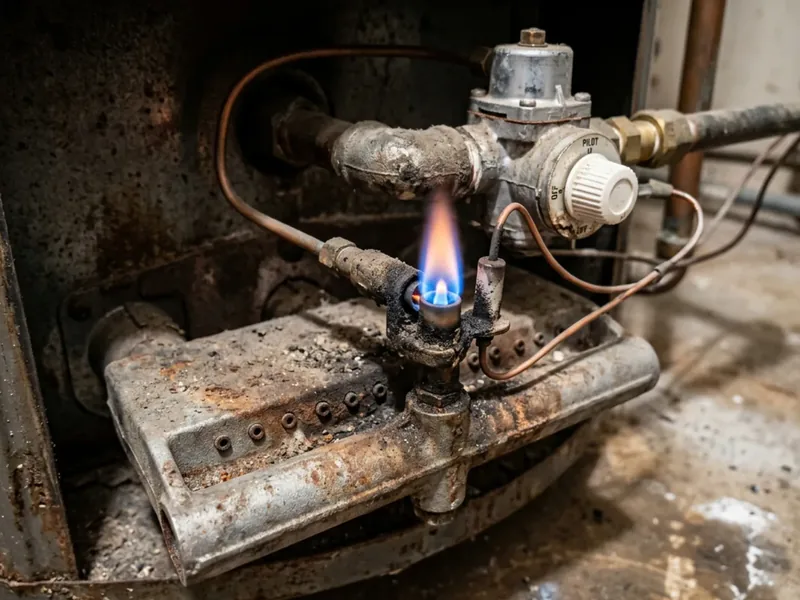
Few household frustrations match the cold shower that follows a pilot light gone out. On a gas water heater, the pilot is a tiny flame with an outsized job: it stands ready to ignite the main burner whenever the thermostat calls for heat, and its presence tells the gas valve it is safe to operate. When the pilot will not stay lit, the whole heater goes silent — no burner, no hot water, no explanation on the front of the tank.
Pilot problems are among the most common gas water heater service calls, and many have simple causes: a dusty pilot orifice, a tired thermocouple, a downdraft down the flue. This guide walks through how the pilot system works, what goes wrong, what you can safely try, and where the line sits between homeowner troubleshooting and calling a professional.
How the Pilot System Works
The pilot assembly has three parts working together. The pilot burner produces a small steady flame. The thermocouple — a thin copper rod with its tip in that flame — generates a tiny electric current when heated. That current holds open an electromagnet inside the gas control valve, keeping the pilot gas flowing. Flame heats thermocouple, thermocouple holds valve open, valve feeds flame: a self-sustaining loop with a built-in safety — if the flame dies, the thermocouple cools, the magnet releases, and gas shuts off automatically.
Relighting involves holding the gas valve's pilot button down manually (bypassing the magnet) for 30–60 seconds after ignition, giving the thermocouple time to heat up and take over. Every failed relight is a clue about which part of the loop is broken.
Common Pilot Light Problems
- Pilot will not light at all. No gas reaching the pilot — check that the gas supply is on, then suspect a clogged pilot orifice or a failed igniter.
- Pilot lights but dies when you release the button. The classic thermocouple failure — the number one cause of pilot problems. The thermocouple is not generating enough current to hold the valve open.
- Pilot flame is weak, yellow, or lifting off. A dirty or partially blocked pilot orifice starves the flame. It may not engulf the thermocouple tip properly, causing intermittent dropout.
- Pilot goes out randomly. Downdrafts down the flue (common during windy weather or when attic vents create negative pressure), a failing thermocouple, or a gas valve on its way out.
- Pilot will not stay lit after thermocouple replacement. Now the gas control valve itself is suspect — its internal pilot magnet may have failed.
What You Can Safely Try
Start with the manufacturer's relight instructions on the heater label — follow them exactly, including the waiting period if a previous attempt failed (this lets unburned gas dissipate). If the pilot lights but will not stay lit, the thermocouple is the likely culprit and it is a replaceable part: shut off the gas, remove the burner assembly, swap the thermocouple (making sure the new one's tip sits properly in the pilot flame), and reassemble.
You can also gently clean a dirty pilot orifice — dust and lint accumulate in burner compartments, especially in Florida garages. But use care: the orifice is tiny and easily damaged. Never enlarge it or poke it with anything harder than a soft brush or compressed air. If you smell gas at any point, stop, leave the area, and call for help rather than continuing to troubleshoot.
When to Call a Professional
Call when: the pilot will not stay lit after thermocouple replacement, you smell gas, the burner compartment shows soot or scorching (signs of poor combustion or flue problems), the gas control knob is damaged, or you are simply not comfortable working around gas. Soot in particular deserves professional diagnosis — it indicates the burner or venting has a problem that a new thermocouple will not fix, and it can involve carbon monoxide.
Florida conditions add their own wrinkles. Corrosion from garage humidity attacks pilot assemblies and gas connections. Lizards and insects nesting in burner compartments are a genuine Florida service-call category — a pilot that worked fine in spring quits after a wasp builds in the air intake. During professional gas water heater repair, the technician inspects the full combustion path, not just the pilot.
Preventing Repeat Pilot Problems
Keep the area around the heater clean and the burner compartment free of dust — vacuum it gently during seasonal checkups. Make sure the flue vent is unobstructed and properly drafting; a blocked or backdrafting flue blows pilots out and worse. Do not store items against the heater that block combustion air. And if your heater is over ten years old with recurring pilot issues plus other symptoms (rust, noise, slow recovery), the pilot may be the messenger telling you the heater's overall condition is declining — worth an honest assessment of repair versus replacement before the next cold shower.
Downdrafts and Florida Weather: Why Pilots Go Out in Storms
Valrico homeowners often notice a pattern: the pilot goes out during or right after a big storm. This is not coincidence — it is downdrafts. Florida thunderstorms and tropical systems create powerful, shifting winds that pressurize the area around your roof vent. When a gust pushes down the flue harder than the rising hot gases push up, the downdraft can snuff the pilot flame or blow it off the thermocouple.
Garage installations are somewhat sheltered, but the vent still terminates at the roof where wind rules. Attic installations — common in Florida homes — can be worse, since attic pressure dynamics during storms are chaotic. If your pilot reliably dies during storms but behaves the rest of the year, the venting and draft are the prime suspects, not the gas valve.
The fixes are venting fixes: a proper draft hood, a wind-resistant vent cap, and confirming the flue has no blockages, separations, or improper slope. A vent cap crushed by a fallen branch during hurricane season will cause exactly this pattern. This is also a carbon monoxide issue, not just a convenience issue — a downdraft-prone vent can spill combustion gases into the living space. If storm-related pilot outages are your pattern, have the venting inspected rather than just relighting the pilot for the fifth time. The pilot is the symptom; the draft is the disease.
Thermocouple Replacement: The Most Common Fix
When the pilot lights but dies the moment you release the button, the thermocouple is the culprit more often than not. It is a simple device — a copper probe that generates a tiny electric current when heated by the pilot flame, signaling the gas valve to stay open — and it wears out from years of sitting in a flame. On heaters past the eight-year mark in Valrico's humid garages, where corrosion attacks the connections too, thermocouple failure is the single most common pilot complaint we see.
Replacement is straightforward for a technician: shut off the gas, remove the burner access panel, unscrew the old thermocouple from the gas valve and unclip it from the pilot bracket, then reverse the process with the new one. The critical details are positioning — the probe tip must sit squarely in the pilot flame — and using the correct length and thread type for your valve. A thermocouple that is slightly mispositioned will cause the exact same symptom as a failed one, which is why "I replaced it myself and it still goes out" is a call we get regularly.
Before replacing, it is worth checking the simple things: a pilot flame that is weak, yellow, or lifting off the thermocouple may just need the pilot orifice cleaned — spider webs and dust are genuine causes in Florida garages. But if the flame looks healthy and the pilot still will not stay lit, the thermocouple has earned its retirement. It is a low-cost part and a quick job, and it resolves the problem the large majority of the time.
When a Pilot Problem Means a New Gas Valve
Sometimes the thermocouple is innocent and the gas control valve itself has failed. The telltale signs: the pilot stays lit reliably, but the main burner never fires or fires erratically; the water temperature swings wildly or overheats; or a new thermocouple changes nothing. The valve's internal mechanisms — the thermostat, the safety shutoff, the pressure regulation — wear out, and unlike the thermocouple, the valve is not a cheap part.
Here the age math matters. A gas control valve replacement on a five-year-old heater is a sensible repair. The same repair on a twelve-year-old heater with rusty water and a rumbling tank is good money after bad — you are investing in a heater that is already past its realistic Florida lifespan. Our repair-versus-replace guide lays out the full framework, but the rule of thumb holds: expensive part plus old tank equals replacement.
One more scenario worth mentioning: if the pilot goes out and you smell gas, or the area around the heater smells of gas at any time, stop troubleshooting and treat it as a gas emergency — leave the area and call for help. Pilot problems are routine; gas odors are not. Never attempt to disassemble a gas valve yourself, and never bypass the thermocouple safety to "keep the pilot lit." That safety exists to prevent gas from flowing with no flame to burn it, and defeating it is how houses make the news.
Pilot Won't Stay Lit in Valrico?
Do not wrestle with gas components alone. Water Heater Leak Repair Works diagnoses pilot and gas control problems safely — call for a free estimate.
Frequently Asked Questions
How long should I hold the pilot button down?
Typically 30 to 60 seconds after the pilot lights — long enough for the thermocouple to heat fully. Follow your heater's label instructions; releasing too early is the most common relight mistake.
Can a bad thermocouple be cleaned instead of replaced?
Light soot can be gently cleaned, but thermocouples are inexpensive and they weaken with age and heat cycling. Replacement is the reliable fix; cleaning is a temporary measure.
Why does my pilot go out every time it is windy?
Downdrafts pushing down the flue can blow out a weak pilot. Check for a proper vent cap, blockages, or negative pressure from attic exhaust fans. A healthy, strong pilot resists minor downdrafts; a marginal one does not.
Is it dangerous if the pilot goes out?
The thermocouple safety system shuts off pilot gas when the flame dies, so a simple pilot outage is not inherently dangerous. The danger comes from gas odor (indicating a leak elsewhere) or from repeatedly attempting relights without letting gas dissipate.
My heater has electronic ignition, not a standing pilot. Does this apply?
Partially. Electronic ignition systems eliminate the standing pilot but can still fail to ignite due to dirty flame sensors, bad igniters, or gas supply issues. The troubleshooting differs — flame sensor cleaning replaces thermocouple replacement as the common fix.