Published: 2026-10-12
Water Heater Warranty and Leak Coverage
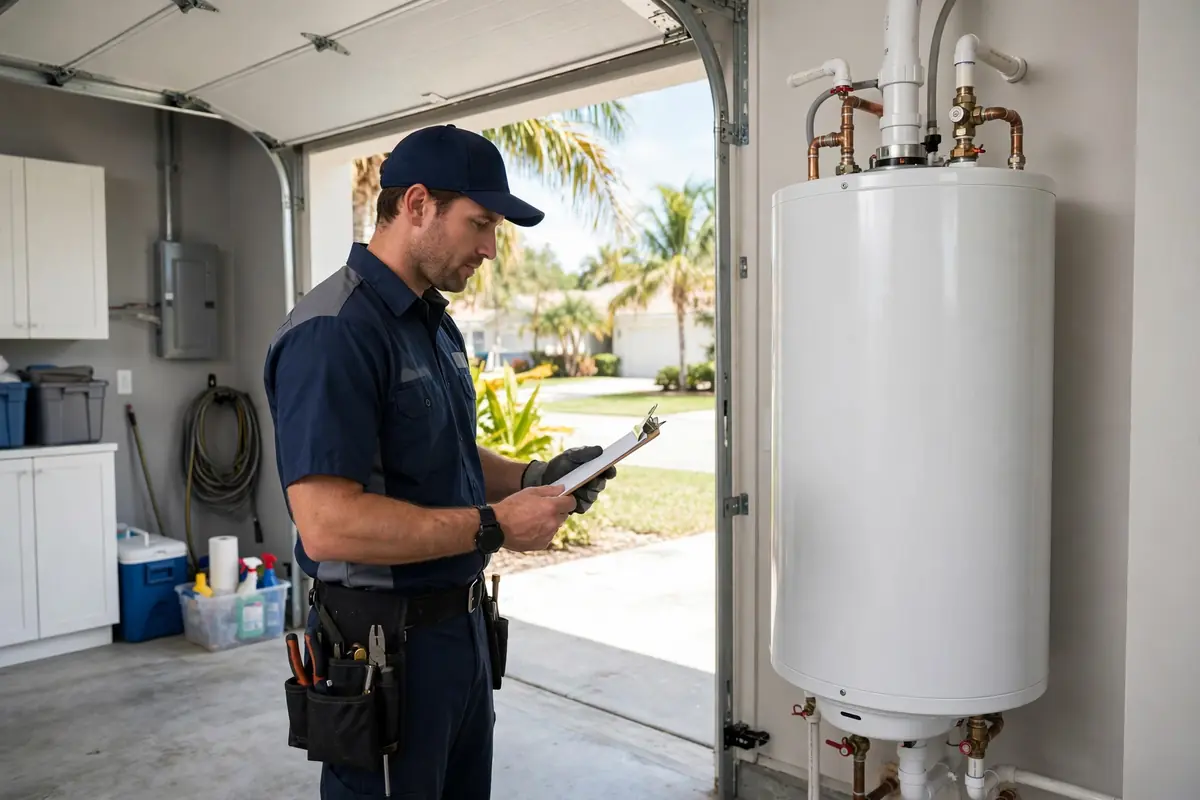
Your water heater leaks, and the first question on your mind is whether the warranty covers it. The honest answer is: sometimes — and the difference between a covered replacement and a denied claim usually comes down to paperwork, maintenance history, and the fine print nobody read at installation. This guide breaks down manufacturer warranties, what they actually cover when leaks happen, how to file a successful claim, and the steps Valrico homeowners can take today to make sure a future claim holds up.
What a Manufacturer Warranty Actually Covers
Water heater warranties have two separate parts, and they cover different things for different time spans. Understanding the split is the key to knowing where you stand when a leak appears.
The tank warranty — typically 6, 9, or 12 years — covers the steel tank itself against manufacturing defects. If the tank wall fails and the unit leaks through no fault of installation or maintenance, the manufacturer replaces the tank (usually with a whole new unit, since tanks are not field-repairable). Longer tank warranties generally indicate better-built units — thicker steel, larger anode rods, better glass lining — which is why a 12-year model costs more upfront.
The parts warranty — usually 1 to 6 years — covers components like heating elements, thermostats, gas control valves, and TPR valves. If your heater leaks because a two-year-old drain valve failed, that falls under parts coverage, not tank coverage. Labor is almost never included in manufacturer warranties; you pay for the service call even when the part is free.
Tankless heaters split differently: the heat exchanger often carries 10 to 15 years, while electronics and other parts get shorter terms. Because heat exchanger failures in tankless units are the equivalent of a tank rupture, that long exchanger warranty is the coverage that matters most.
Leaks That Are Covered — and Leaks That Are Not
A leak from the tank body itself — a seam split, a pinhole through the wall, a weld failure — is exactly what the tank warranty exists for, provided the unit is within its warranty period. File the claim with the serial number and you are typically entitled to a replacement unit.
But most leak scenarios fall into the exclusions, and this is where Valrico homeowners get surprised:
- Sediment damage. If the tank failed because years of unflushed sediment overheated the bottom, many manufacturers classify that as a maintenance failure, not a manufacturing defect — and deny the claim. Our hard Hillsborough County water makes this the most common denial reason in Florida.
- Improper installation. Wrong venting, missing expansion tank, no drain pan where code requires, or installation by an unqualified person can void the warranty entirely. Florida plumbing code requirements matter here — a missing thermal expansion device on a closed system is a frequent void trigger.
- Anode rod neglect. Some manufacturers explicitly require anode rod inspection as part of maintenance. A tank that corroded through because the rod was never checked is a maintenance failure in their eyes.
- Water quality. Excessive hardness, aggressive well water, or water outside the manufacturer's stated chemistry limits can be exclusion grounds — relevant for Valrico-area well water in Lithia, Dover, and Thonotosassa.
- Flood, storm, or freeze damage. Hurricane-season flooding that kills a heater is an insurance matter, not a warranty matter.
- Leaking fittings and connections. A leak at a pipe connection the installer made is an installation issue, covered — if at all — by the installer's labor warranty, not the manufacturer's.
The pattern is clear: the warranty covers defects in how the heater was made, not damage from how it was maintained, installed, or treated. Keeping maintenance records is the single best way to keep a claim in the "covered" column.
How Warranty Claims Actually Work
Filing a claim starts with the serial number on the rating plate — photograph it now, before age and humidity make it unreadable (a common problem in Florida garages). The serial encodes the manufacture date, and that date usually defines the warranty start unless you can prove a later installation date with a receipt.
Register the warranty. Many manufacturers shorten coverage or add hassle for unregistered units. Registration takes five minutes online and requires the model and serial numbers plus the install date. Do it the week of installation — "I'll get to it" is how coverage quietly shrinks.
Keep proof of installation date. The warranty clock often starts at manufacture, not installation, so a unit that sat in a warehouse for a year costs you a year. An installer's invoice with the date can reset the start to the install date with most brands.
Expect pro-rating. After the first year or two, most tank warranties go pro-rated: the manufacturer credits a percentage of the unit's value toward a replacement, declining each year. A failed tank in year 10 of a 12-year warranty might get you a 20 percent credit — helpful, but not a free heater. Labor, permits, and code upgrades on the new install are yours regardless.
Documentation wins claims. Receipts for professional maintenance, flushing service records, and anode rod replacement invoices turn a disputed claim into an approved one. Store them with the warranty paperwork — a folder by the heater works, and a phone photo backup is even better.
Installer Labor Warranties
Separate from the manufacturer's warranty is the installing company's labor warranty — typically one year, sometimes two, covering the workmanship: connections, venting, gas lines, expansion tank setup, and code compliance. If a leak traces to a fitting the installer sweated, a mis-set gas control, or a missing expansion device, this is the warranty that pays.
Ask about labor warranty terms in writing before any installation. A one-year labor warranty is standard; longer terms are a quality signal. And if a different company later services the heater, keep in mind that some labor warranties require the original installer to perform warranty work — check the terms before calling someone else.
Home Warranties vs. Manufacturer Warranties vs. Insurance
These three get confused constantly, so here is the clean split. The manufacturer warranty covers defects in the heater itself. A home warranty (the service-contract kind sold to homeowners) covers mechanical breakdown from normal wear — it can cover a failed heating element or control board, but usually caps payouts, charges a per-visit trade fee, and excludes pre-existing conditions and code upgrades. Homeowners insurance covers sudden, accidental water damage — the ruined flooring and drywall from a burst tank — but not the failed heater itself, and not damage from a leak that dripped slowly for months (that is a maintenance exclusion).
When a tank ruptures in a Valrico garage at 2 a.m., all three may be in play: manufacturer warranty for the replacement unit, insurance for the water damage, and the home warranty possibly for labor. Knowing which door to knock on saves days of runaround. Photograph everything before cleanup — insurers and warranty adjusters both need evidence of what happened and when.
Protecting Your Warranty in Valrico
Florida conditions create the exact scenarios that void warranties, so Valrico homeowners need to be deliberate about it:
- Flush on schedule and keep the receipts. Twice-yearly flushing for city water, quarterly for well water — and keep the service invoices. This is your proof against the sediment-damage denial.
- Check the anode rod every 2 to 3 years. In our hard water, rods deplete fast. Replacing a spent rod is cheap; a denied tank claim is not.
- Maintain the expansion tank. A failed expansion tank lets pressure spike with every heating cycle — manufacturers can point to that as the cause of a seam failure. Annual pressure checks keep it honest.
- Use a drain pan with a drain line where the heater sits over finished space or in an attic — code requires it in many configurations, and code compliance is a warranty condition.
- Register the unit and file the paperwork the week it goes in. Future-you will thank present-you.
Our maintenance service produces the dated, itemized service records that warranty claims run on — flushing, anode inspection, expansion tank pressure check, and TPR test, all documented in one visit.
What to Do When You Suspect a Warranty-Covered Leak
First, stop the damage: shut off water and power or gas to the heater, following our emergency shutoff guide. Second, document — photos of the leak location, the rating plate with model and serial, and the installation area. Third, check your warranty status: find the paperwork, confirm the install date, and verify you are within the tank or parts term. Fourth, call — both the installer (for labor coverage) and the manufacturer's warranty line (for the unit). Do not authorize a full replacement on your own dime before the warranty process has a chance to respond; once you have paid another company to swap the unit, the manufacturer's obligation gets murky.
If the unit is out of warranty, the math shifts to repair versus replacement — and a tank-body leak on an out-of-warranty unit always means replacement.
Leaking Heater? Let's Sort the Warranty.
We diagnose the leak, check your warranty status, and handle the replacement — in Valrico, Brandon, Riverview, and surrounding areas. Call for a free estimate.
Frequently Asked Questions
Does my water heater warranty cover leaks?
A leak from the tank body itself is covered during the tank warranty term. Leaks from fittings, valves, sediment damage, improper installation, or neglected maintenance are typically excluded — which is why maintenance records matter so much.
How do I find my water heater's warranty status?
Photograph the rating plate's model and serial numbers, then check the manufacturer's website or call their warranty line. The serial encodes the manufacture date; your installer's invoice can establish a later start date.
Does flushing really affect my warranty?
Yes. Manufacturers can deny tank claims when sediment damage caused the failure and no flushing was ever done — and in Valrico's hard water, sediment builds fast. Keep dated flushing receipts as proof of maintenance.
Is labor covered under a water heater warranty?
Almost never by the manufacturer. Labor falls under the installer's separate labor warranty, typically one year. You pay for diagnosis and installation labor even when the replacement unit or part is free.
Will a home warranty cover my leaking water heater?
Sometimes — home warranties cover mechanical breakdown from normal wear, but with payout caps, per-visit fees, and exclusions for pre-existing conditions and code upgrades. Read your contract's plumbing section before filing.
Does homeowners insurance cover water heater leaks?
Insurance covers sudden, accidental water damage to your home — not the failed heater itself, and not damage from a slow leak that went unaddressed for months. Photograph everything before cleanup and report promptly.